

Investing in the Most Hated Asian Nation
Just two years ago, this economy was one of the most loved. Now it's hated - historically hated.

In October of 2025 Indonesian President, Prabowo Subianto, was caught in a hot mic moment that properly summarizes his reputation.
Subianto asked President Trump to meet with his son, Eric, for an assumed business deal. Both the US and Indonesian governments issued statements dismissing the interaction, but the overall event didn’t surprise anyone.
Subianto, who seems to suffer from blatant corruption allegations nearly every month, just can’t seem to do anything right. Most recently, his free meal plan for schools has gone terribly off course.
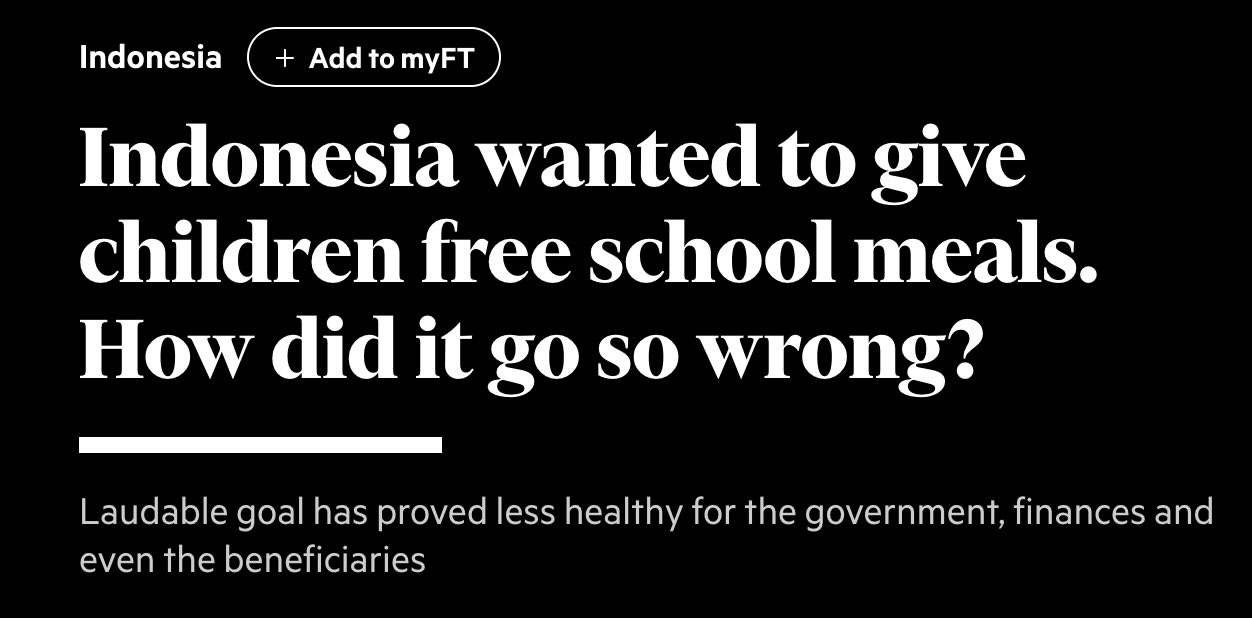
In addition to corruption charges relating to contracts with meal providers, kids were suffering from food poisoning from those actual meals. The program, which Subianto ran his Presidential campaign on, has been a complete disaster.
And that’s how foreign investors view Indonesia right now - a disaster that’s not worth touching.
How Bad Can Indonesia Get?
Elected in late 2024, Subianto has until 2029 until his five year term is over. That’s assuming he doesn’t get reelected.
There are a lot of reasons to believe that Indonesia will continue on its path to being a black hole for investors.
That’s especially apparent when you look at the performance of the Indonesian ETF EIDO 0.00%↑ over the past five years relative to every other emerging market ETF.
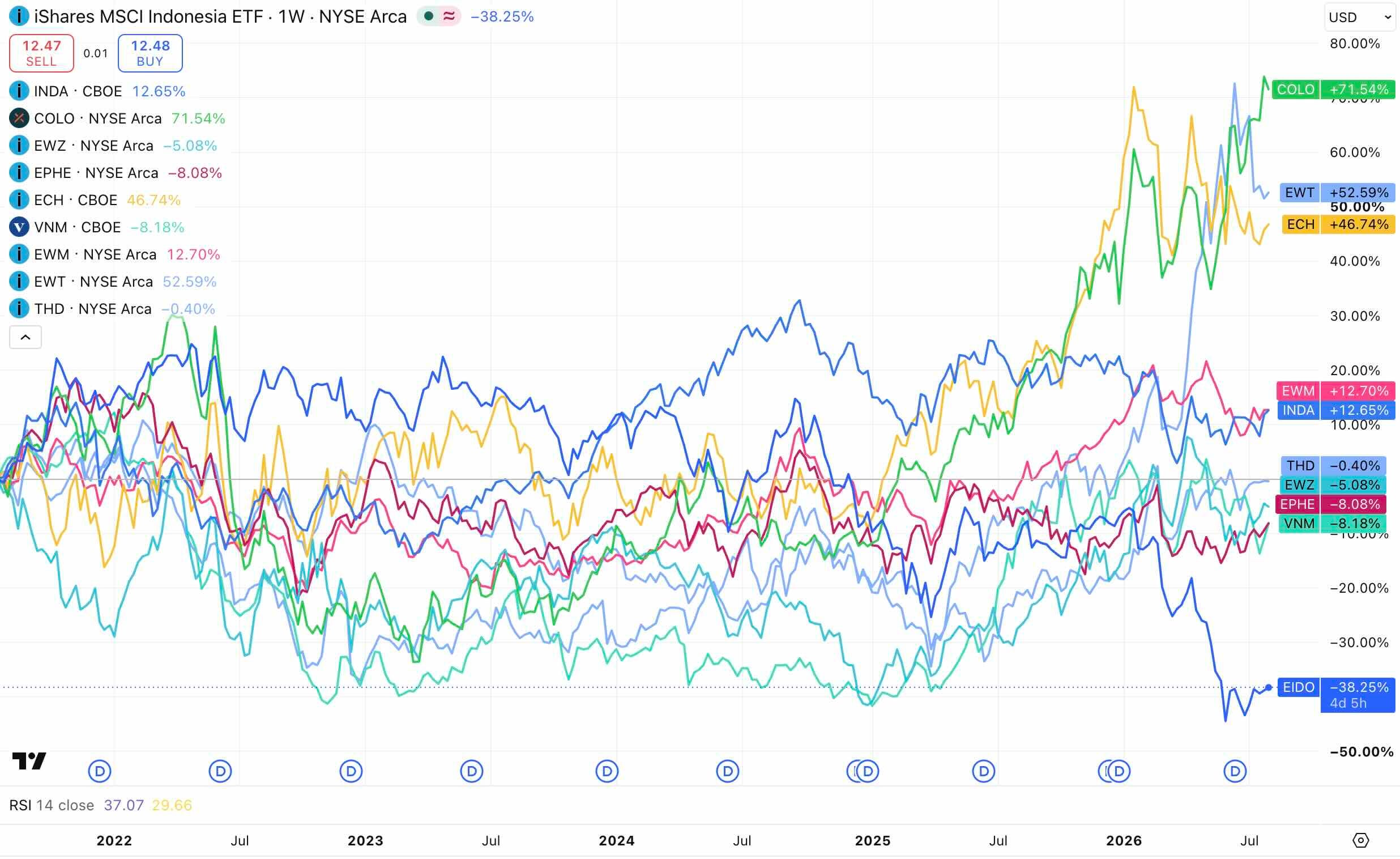
Investors have punished the ETF and even many of the individual companies that operate in the country.
Take Telkom Indonesia for example, which you can buy in the US under TLK 0.00%↑ . They’re down 30% YTD despite having a 7% yield and trading with a forward P/E of 12.
The Indonesia market is hated, its leadership is hated, and investors have given up on this once darling emerging market.
Indonesia’s High Hopes
As recently as two years ago investors were very bullish on Indonesia. Major banks were releasing glowing reports about the country’s potential and individual investors were lining up to enter the market.
If you looked at the country’s attributions on paper there is actually a lot to get excited about.
Indonesia is the largest economy in Southeast Asia, has the world’s fourth largest population, and has one of the youngest demographics of any emerging market.
Then, when you consider the country’s enormous natural resources and a GDP that has been growing at over 5% over the past several years, you can see how this part of the globe has enormous potential.
Yet, the country keeps getting cheaper.
Time to Buy Hated Indonesia?
Recently I wrote a post about nickel and why the world is going to need a lot more of the silver metal.

It just happens that Indonesia supplies over half of the world’s nickel consumption (that’s in addition to significant supplies of oil, gold, coal, bauxite, and many other natural resources).
So, the next question is: Will the world’s insatiable demand for these resources propel Indonesia past today’s challenges?
And could that have already started?
This past month, EIDO 0.00%↑ has finally shown some life as it has bounced off of a long term trend line.
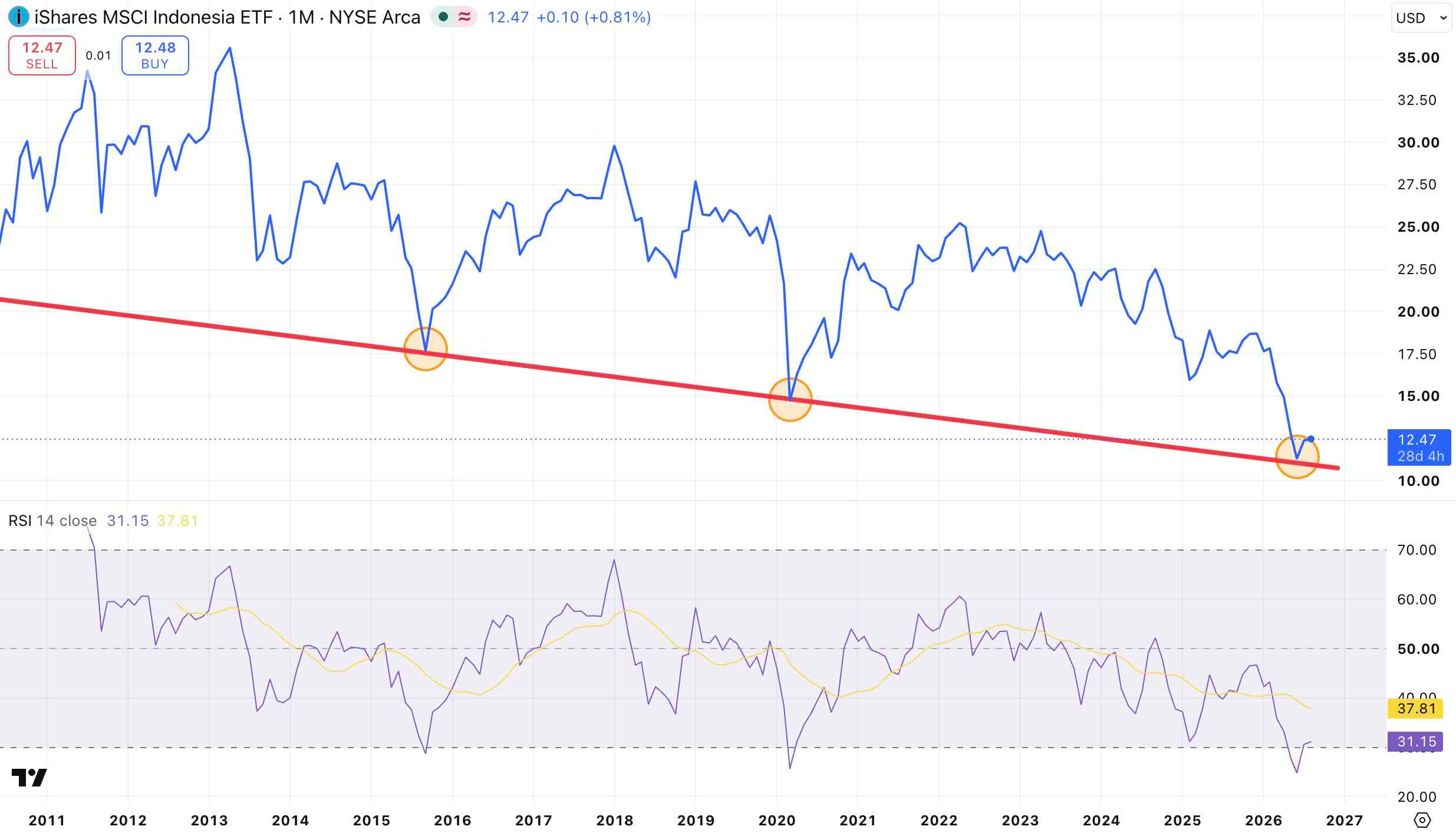
What’s equally notable is the stock’s performance after each of these bounces… It rallies well over 100%.
You’ll also notice that this most recent bounce was the ETF’s most oversold period, ever.
Is this time different? Will Subianto continue to supress that market’s opinion about this emerging market ready to rally?
Or is this time the same… And will EIDO 0.00%↑ go on for a multi-year rally?
Disclaimer: Yes, I run a fund. Yes, I hold this position. No, you shouldn’t invest because I just made this compelling argument. Yes, you should contact me if you’re an accredited investor who wants continuous access to these kinds of investment opportunities.