


NOTE: I’m going to be writing some shorter, easier to digest reports in the coming weeks.
If you like these shorter versions, give this article a ❤️ to let me know.
Here’s this report’s investment thesis: Data Centers ➡️ Energy ➡️ Nickel
In 2011, legendary investor Kyle Bass bought 20 million nickels for $1 million. The media considered it a novelty investment and most people laughed at his purchase.
At the time, the intrinsic value of a nickel was 6.8 cents. So, his $1 million stash of coins was really worth $1,360,000.
If he melted the coins down for their metal value, that would be an immediate 36% gain on his investment.
Not bad.
Of course it’s illegal to melt US coinage, and there are other costs associated with actually melting and storing the coins and metals.
But you get the point.
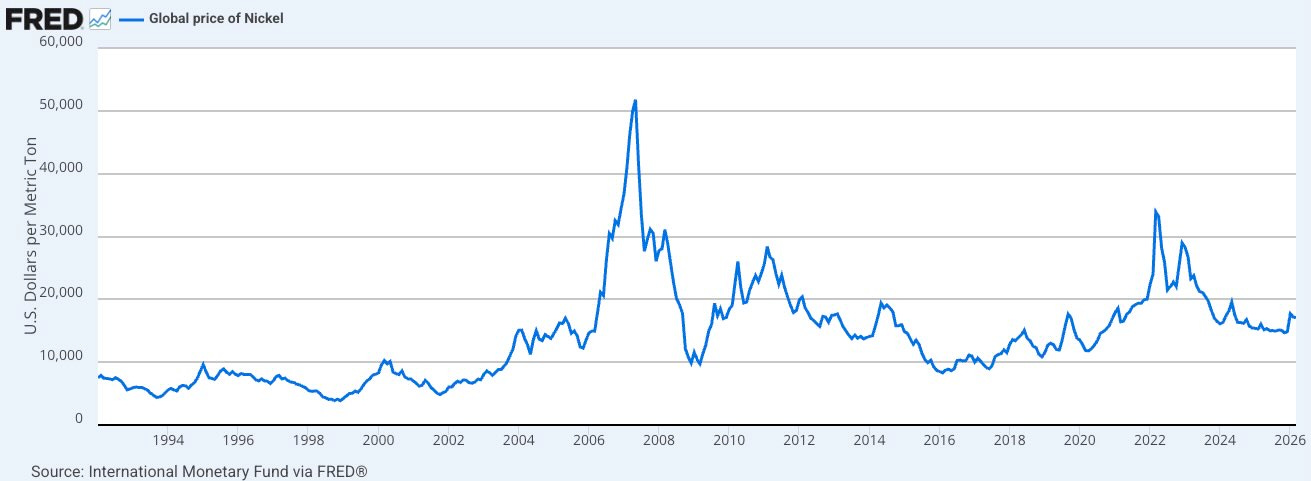
Fast forward to 2022, when the price of nickel spiked, his stash was worth $3,200,000. That’s a $2,200,000 profit over 11 years, for an annualized return of 20%.
Today in 2026 the nickel price has retreated, but a single US nickel’s melt value is still around 7.4 cents.
Is it time to start stacking nickels again?
If you think the world is going to need more energy, then yes…
What’s Nickel Used for Anyway?
We use nickel for pretty much everything.
It’s found in almost every type of metal that you touch everyday and is used in all types of industrial processes.
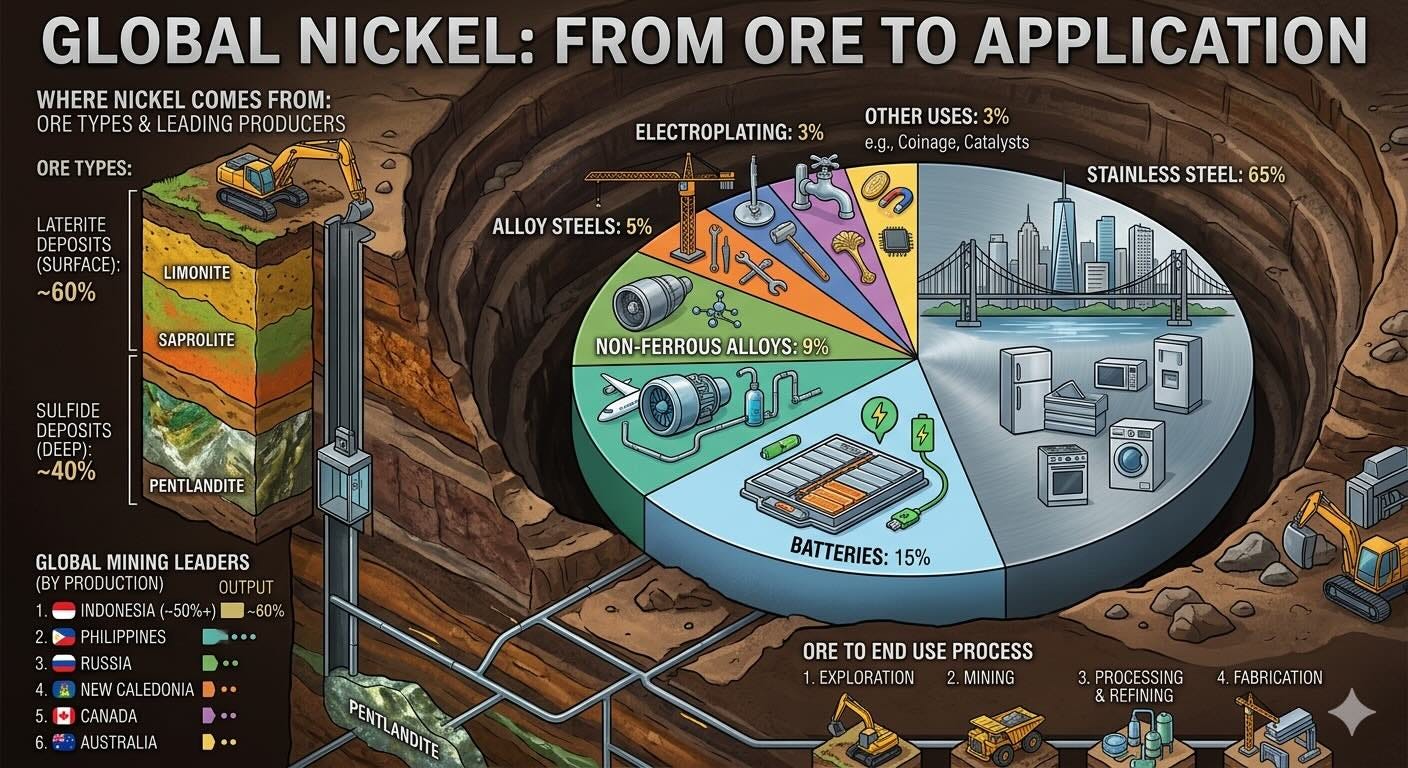
The category that is most interesting going forward is nickel’s use in batteries and solid oxide fuel cells.
I’ll skip batteries for now. I’ll be writing a lot more about the use cases of batteries in the near future and why they are especially interesting in the coming years.
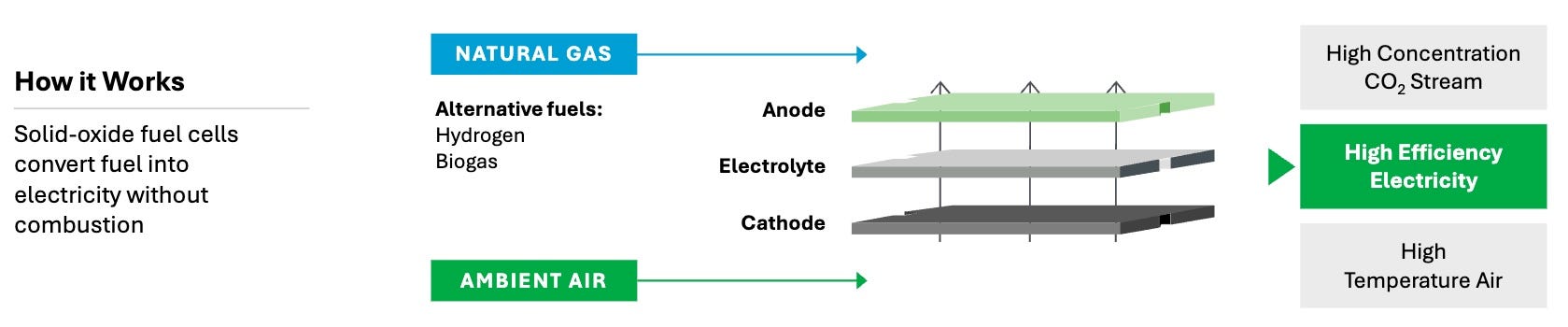
Solid oxide fuel cells could be a huge driver for nickel consumption.
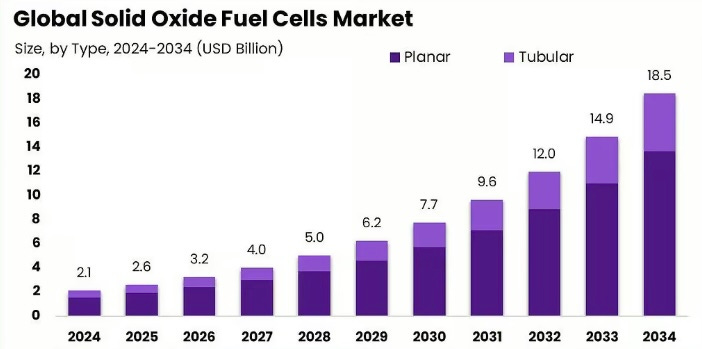
Beyond projections, the market is telling us the same thing…
Nickel Price Arbitrage
See that graphic above that shows the anode, electrolyte, cathode sandwich?
Up to 50% of the anode can be nickel.
So, for solid oxide fuel cells (SOFC’s) nickel is extremely important.
Recently, there have been two publicly traded SOFC companies that have gone parabolic: Bloom Energy BE 0.00%↑ and FuelCell Energy FCEL 0.00%↑.
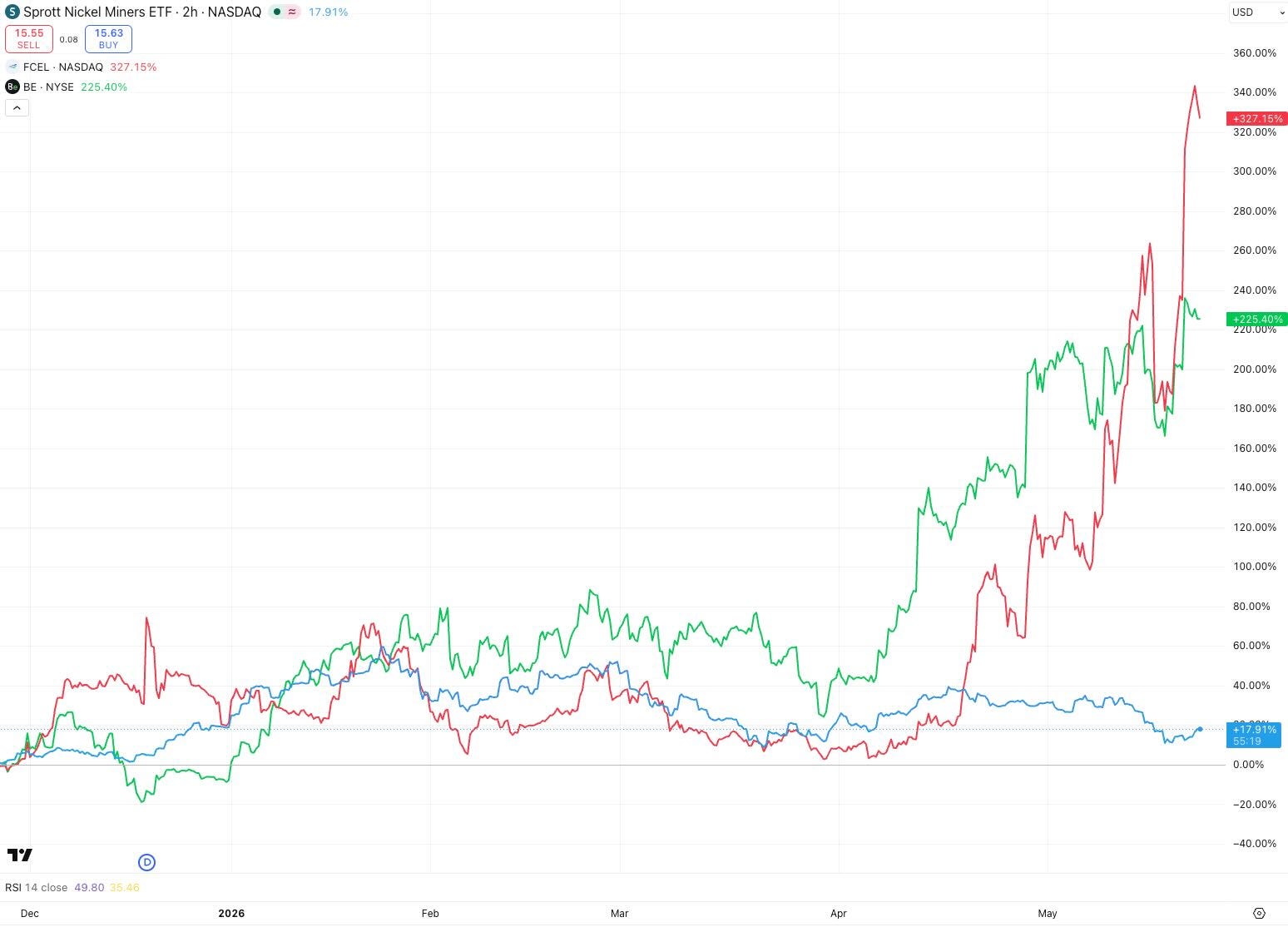
The chart above shows FuelCell in red and Bloom Energy in green.
The blue line is the nickel miner ETF NIKL 0.00%↑.
Of course there are supply and demand economics that come along with nickel, which I’ll dive into soon.
Until then, consider this: Indonesia is the world’s number one producer and refiner of nickel, but a long shot. Here is the Indonesia ETF EIDO 0.00%↑:
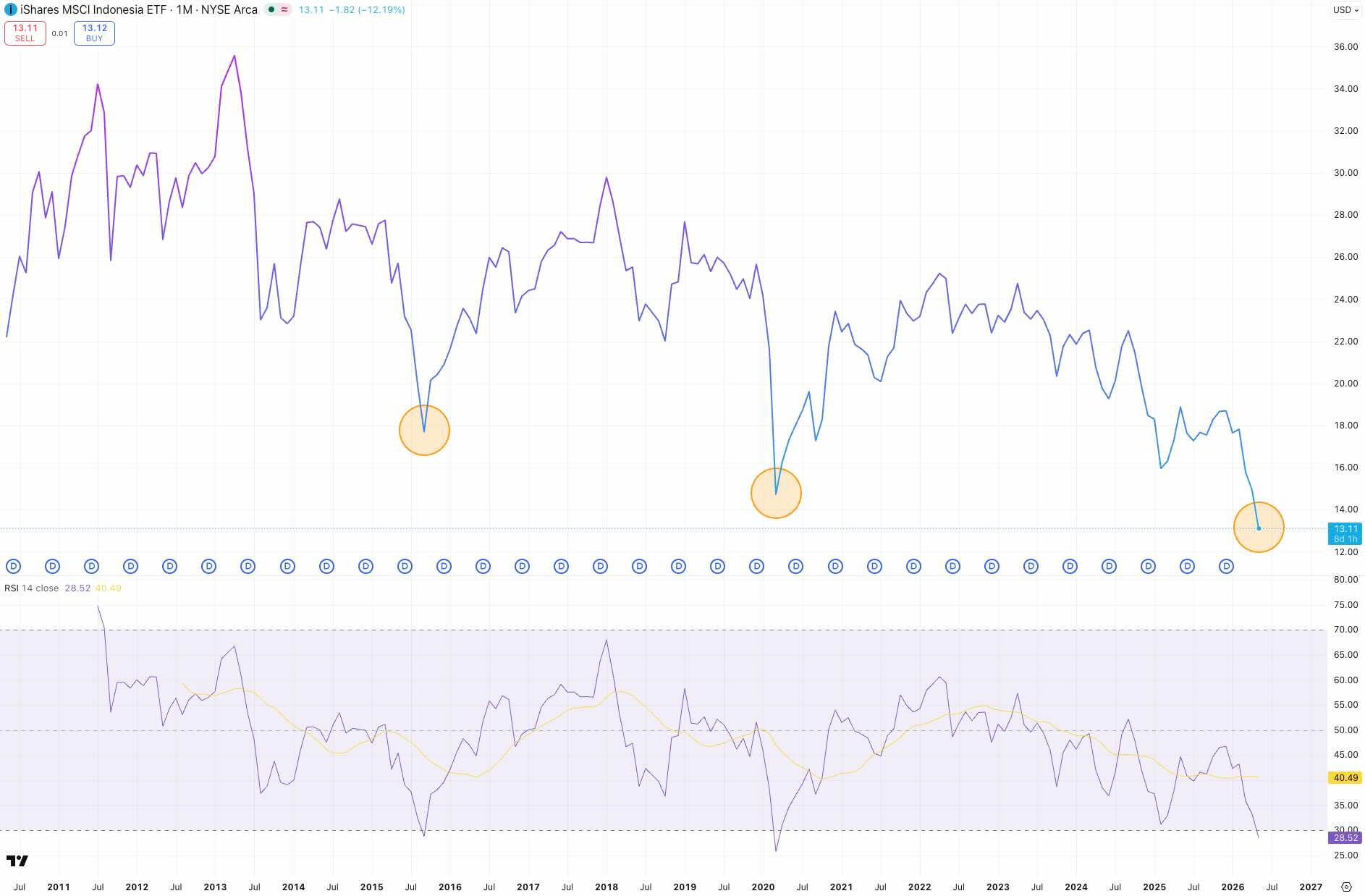
The last two times Indonesia was this oversold, the EIDO 0.00%↑ ETF went on to rally ~100% over the next two years.
Is this time different?
Give me a ❤️ or 🔁 if you enjoyed this.
If you’re an accredited investor and you’re interested in my fund where I pursue these exact opportunities, contact me here: