Right now, as I type this out, there is a YouTube live stream of the impeachment trial of Sara Duterte - the Vice President of the Philippines.
Also, as I type, the MSCI Philippines ETF EPHE 0.00%↑ is the only down position of the day in my portfolio.
The position is sticking out like a sore thumb. All I see is green on my computer screen, except for a single red line that represents the Philippines.
This probably all sounds obscure and unimportant. But I believe what is happening right now with the Philippines could be one of the largest investment opportunities in the next couple of years.
Just like any great investment opportunity, hardly anyone is tracking this situation or understanding what’s going on.
And even fewer people are using any capital to pursue it.
That’s our edge.
A Political Movie in the Making
Within the next five years, I would be shocked if there wasn’t a movie made about the current political situation in the Philippines.
The history, the names, the drama, and the absurdity of it all is just too binge-worthy for Netflix to pass up.
I’m going to keep this extremely high level, but you’ll get the gist of it all and be able to fill in the blanks with your own imagination.
I’ll start with the current President and Vice President of the Philippines:
Ferdinand “Bongbong” Romualdez Marcos Jr. is the current President of the Philippines. Bongbong (yes, that is what people call him) is the son of Ferdinand Marcos, who was also the President of the Philippines from 1965-1986.
Sara Zimmerman Duterte-Carpio is the current Vice President of the Philippines. Sara is the daughter of Rodrigo Duterte, who was the President of the Philippines from 2016-2022.
If this all sounds confusing, that’s because it is. But stick with me here…
Basically, the current President and Vice President of the Philippines are direct decedents of previous Presidents. This isn’t too crazy on its own, as many countries have similar political dynasties (it’s almost like they’re all royalty instead of elected officials!).
Here’s the crazy part: Bongbong and Sara are currently in a fight. Yes, they currently serve as President and Vice President, and yes, they ran together on a united political platform.
This fight isn’t just a simple spat - Sara is currently going through an impeachment trial that could remove her from government all together. And that’s what Bongbong wants.
Understand that I am not including any stories about the decades of alleged corruption, suspicious assassinations, and unbelievable stories that surround both of the Duterte and Marcos families.
You can fill in the blanks.
What we’re left with is a complete clusterfluck and the country’s citizens are sick of the drama.
It’s pretty hard for an emerging market to actually emerge if the leadership of the country can’t even get out of its own way.
Will This Be a Comeback Movie?
Despite the political chaos going on in the Philippines, the country itself is actually very well set up for a dramatic acceleration forward.
The Philippines has the youngest population of the top 40 global economies and could be perfectly positioned to exploit AI in the coming years.
If you want to understand the demographics of this situation better, read the beginning of this:
Is this Asian Food Chain The Next McDonald's? They're Growing Faster and Coming to America

Two weeks ago I made an online presentation to hundreds of international investors while I was in a yurt.
This isn’t just speculation and hope.
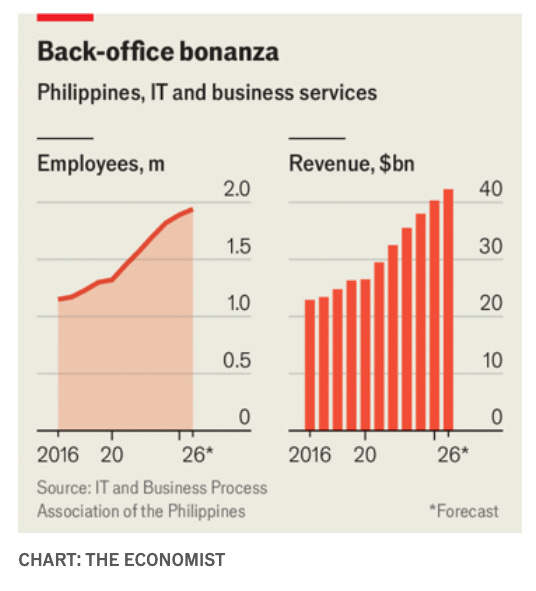
Recent data shows that AI could have the opposite impact on the Philippines that most people were expecting.
Instead of AI displacing remote workers, it’s empowering them.
They’re now providing high level medical, architectural, and engineering services to high paying clients in the US and Europe.
But investors don’t seem to care.
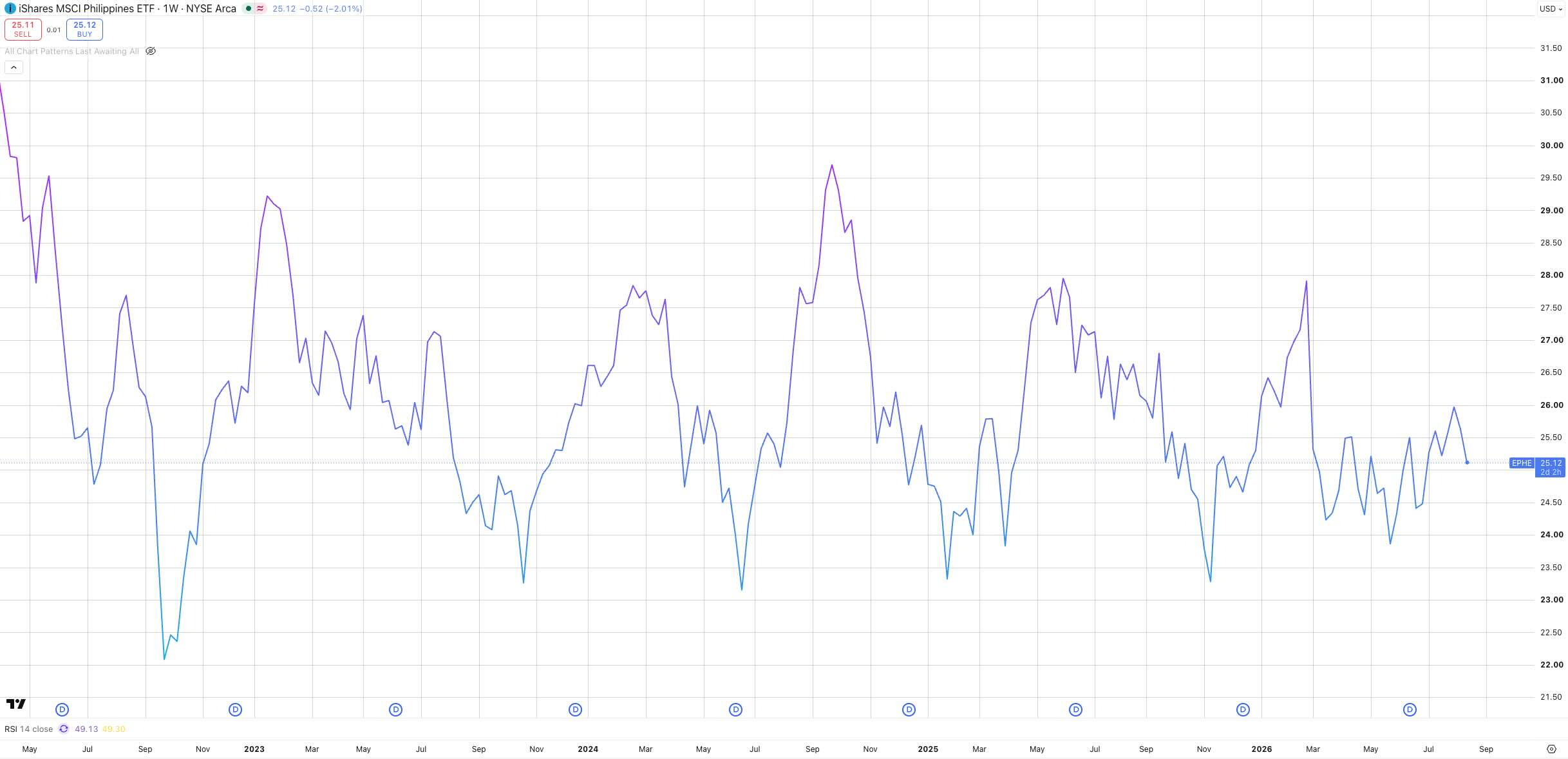
Over the past several years, EPHE 0.00%↑ has just bounced around in a boring range.
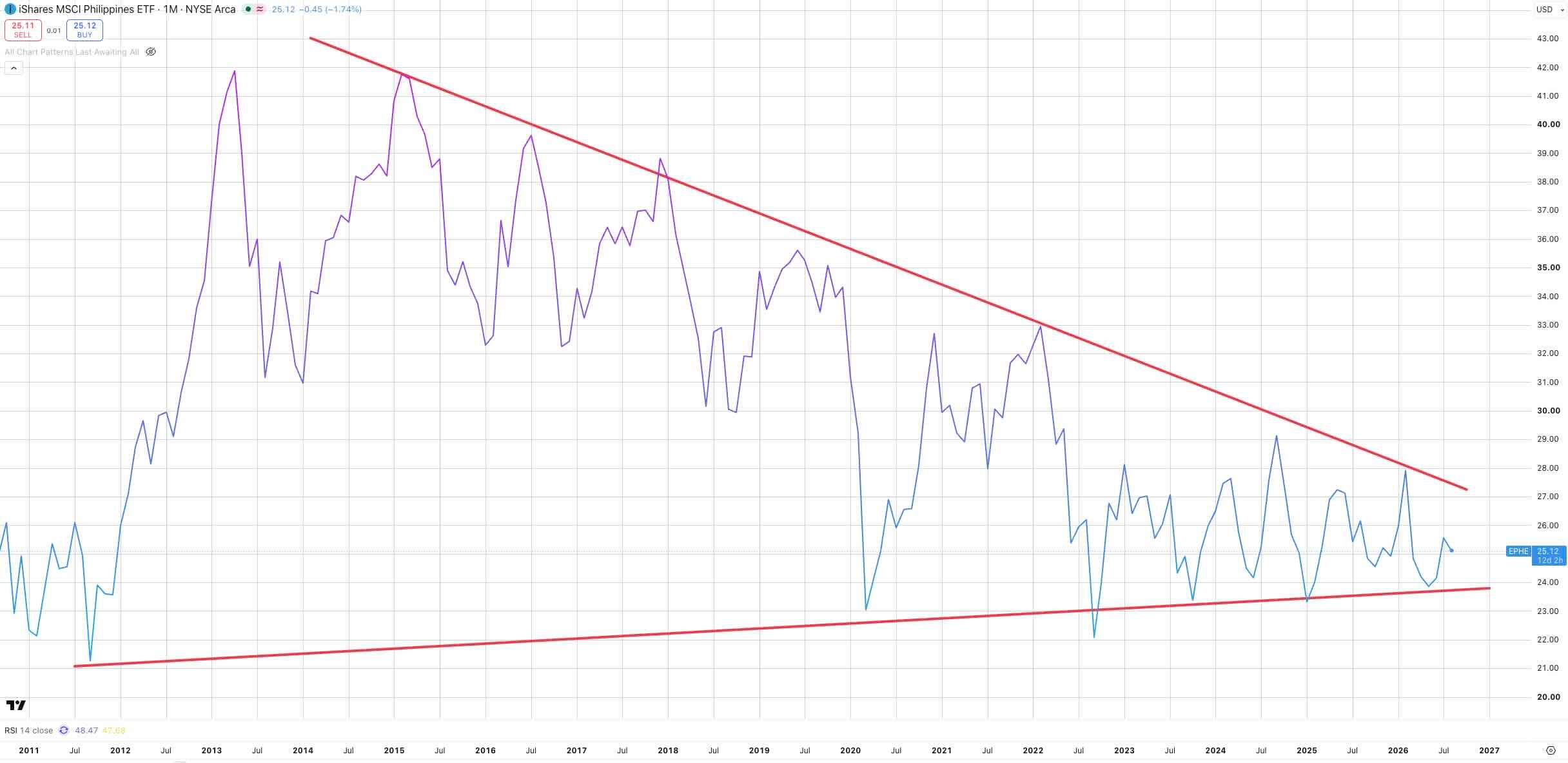
And if you look at the past 15 years, you’ll see a monster wedge forming.
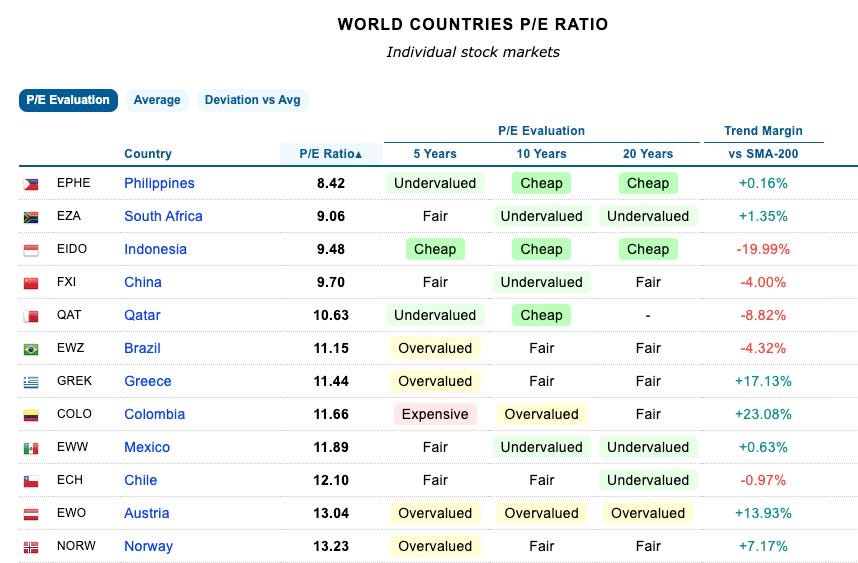
Keep in mind, this ETF has a ~3% yield and a P/E of 8!
And that’s not even mentioning any individual companies that are at rock bottom valuations.
The political risk appears to be too much.
Investors would rather chase AI companies and ignore countries that seem to be going nowhere.
That is, unless something major changes.
Which might be happening right now…
War Drums in Asia
With everything that has been going on with Ukraine and Iran, the media hasn’t been covering the Taiwan topic as much.
Naturally, public attention has gone to the new shiny thing.
But that may be changing soon, as the Wall Street Journal reported today.
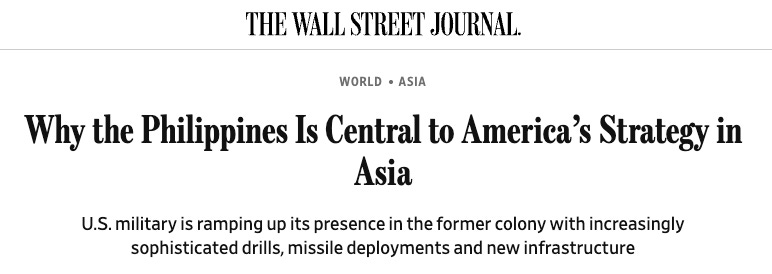
As the article details, the US is strengthen ties with the Philippines in every imaginable way.
One of those ways includes moving all of the Coast Guard cutters, which were previously based in Bahrain, to Singapore and the Philippines.
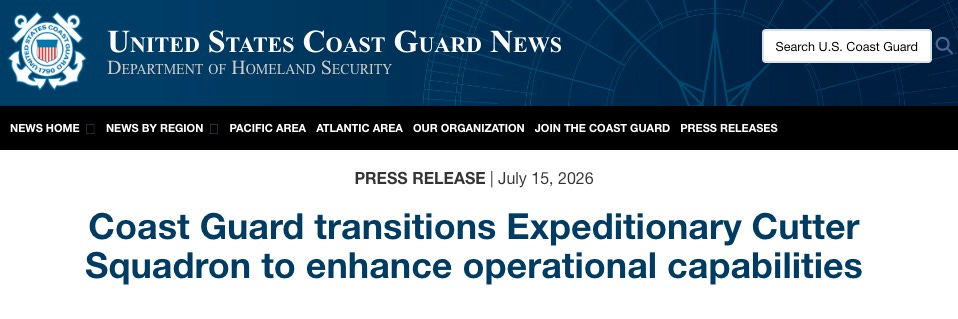
In the Philippines, these cutters will be based in Subic Bay - a strategically located harbor near Scarborough Shoal.
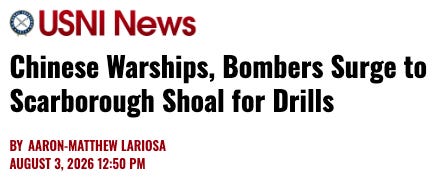
What’s happening in the South China Sea is no secret.
In addition to the Chinese building many different artificial islands (for military bases) they are also getting into constant conflicts with Vietnam, Indonesia, Malaysia, and the Philippines.
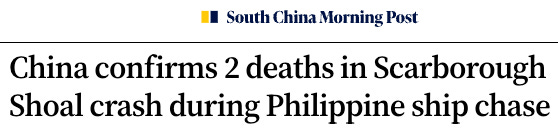
How long will these small scale skirmishes last until something much bigger happens?
That’s an especially pertinent question since US Coast Guard cutters will now be operating much more frequently in the region.
It’s clear the risks aren’t going away.
Could this be a risk to the Philippines?
Or could this be a major opportunity?
The Beneficiaries of Conflict
This is a bit strange to think about, but war can actually be a tool to stimulate economic output.
One of the best examples is how WWII pulled the US out of the Great Depression and ended up creating a massive industrial manufacturing base that went on to create enormous value for many decades after the war.
War can be especially beneficial for countries that are not directly involved in the conflict with their people or sovereign soil.
Here are three examples, two of which are very recent:
Japan during the Korean war (early 1950’s): Japan served as a logistical hub for US and its allies during the Korean war. Not only did this activity aid Japan in pulling out of its post-WWII crisis, it lead to an infrastructure and manufacturing boom that proliferated long after the Korean War was over. This period of time was known as the “Japanese Economic Miracle” and led to ~10% annual GDP growth every year during the 1950’s and 1960’s.
Poland from the start of the Ukraine war in 2022 until present: Initially, the Russian invasion of Ukraine sent Poland’s stock market tumbling, but by late 2022 that trend reversed direction dramatically. Poland became a staging point for Ukrainian allies and now also serves as a major manufacturer and logistics hub for the region. Equally important, over a million Ukrainian refugees entered Poland’s workforce and now contribute an estimated ~3% of Poland’s total GDP.
Israel from October 7th 2023 until present: Similar to the drawdown in Poland, Israel’s stock market declined over 10% after the October 7th attack. However, since then, their stock market has rallied nearly 160% making for ~40% annualized returns. Massive investment and development in tech and defense industries has powered this move. As of Q2 2026, Israel is projected to have a 15% GDP growth rate for the year.
What all three of these examples share in common is a partnership with the world’s most powerful military and economy, the United States.
And that’s the exact scenario that is unfolding in the Philippines right now.
Primed, But Not Yet
With the ongoing political drama and military preparations still underway, this is not a “jump in this right now” moment.
Instead, this is a “watch this very closely and be ready” moment.
What could happen next may be the culmination of the past 15 years…
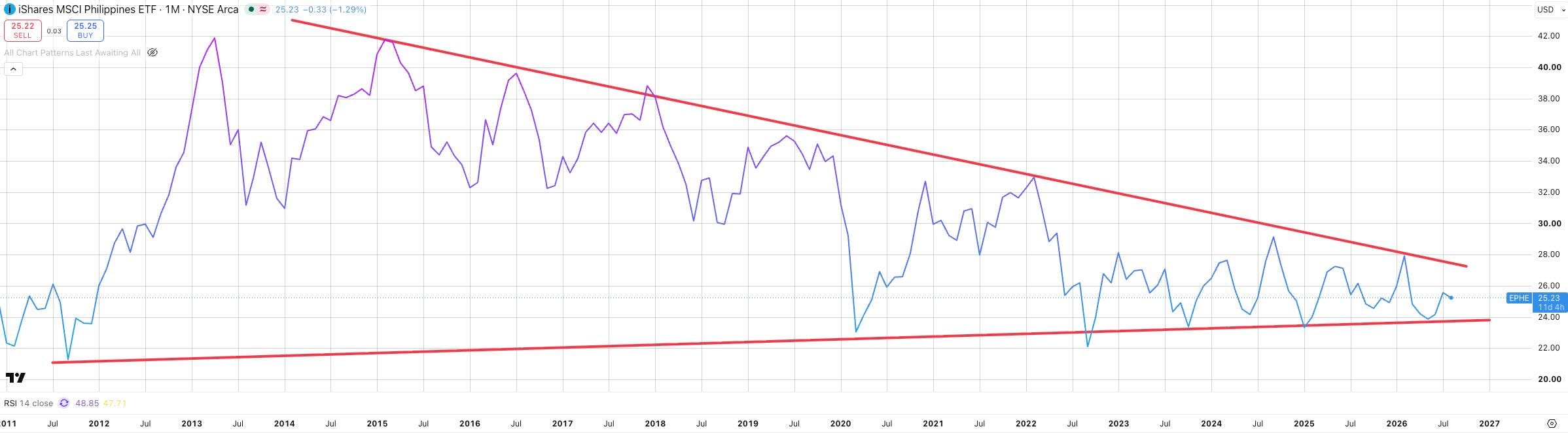
It’s certainly priced right: