

Entangling Allies and Choking Enemies with Natural Gas
Somehow one of the most important commodities in the world is being completely ignored.

NOTE: This is one of the most important trends underway right now with an incredible risk/reward profile. Hardly anyone is talking about this. Below, you’ll learn about the broader story, see the hard data, and understand the compelling forecast that lies ahead.
As I wandered around the America House in Kyiv, I kept thinking to myself, ‘Why are my tax dollars funding this?!’
This was in 2020 - I was clearly oblivious to the bigger picture.
There were drinks, food, movies to watch, computers to use, classes to take, and more.
It was all free, and it was all really nice.

Then I learned there are two additional America Houses in Ukraine - one in Lviv and one in Odessa.
And then I learned there’s a lot more of these ‘America Houses’ around the world.
Over 700 more in 141 different countries.
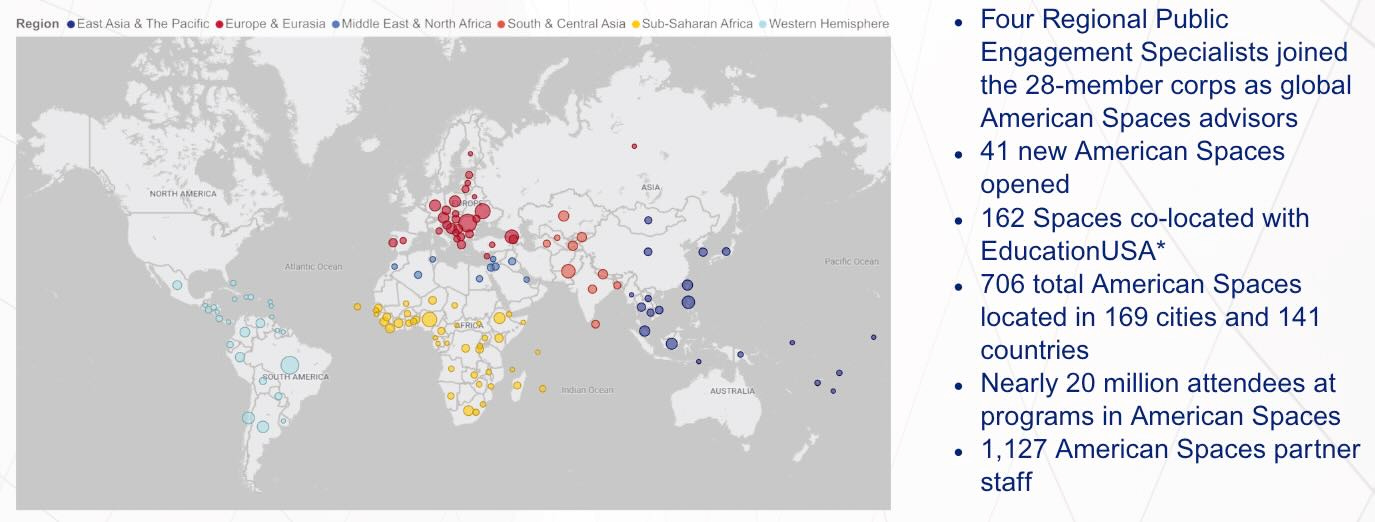
Source: American Spaces
They’re technically called “American Spaces” and they are run by the US State Department.
These installations are basically on one end of the foreign influence spectrum - the soft power end.
They provide an American experience inside a foreign country, like dangling a carrot on a stick.
The America House in Kyiv is one tiny puzzle piece in a broader geopolitical picture that eventually led to war.
No one is going to say that out loud.
There will be plenty of people that will scoff at that statement and say something like, [in caveman voice] ‘Russia bad, Ukraine good, America need help more.’
What I’m about to explain here is not just about Ukraine and Russia.
Their war, as you’ll find out below, is actually a part of a much broader conflict that we’re all inadvertently a part of.
And much of it is underpinned by gas.
Natural gas.
Energy Builds Empires
Last year I found myself sitting inside the US Embassy in Georgetown, Guyana.
I had a meeting set up with the chargé d'affaires to see how they could support my possible investment into the country.
Several months prior, I had hosted an investment dinner at the historic Cara Lodge with guests from ExxonMobile, the US Embassy, and the Guyanese government.
It was clear - the Guyanese wanted our investment capital, and the US officials wanted us to make the investments happen.
Notes From Guyana

"This is the wildest place I've ever done business," he yelled. "And that's saying something coming from me. I've been in the oil industry for 40 years all across Africa, Russia, and the Middle East." In the background, Afro-Latin music was playing so loudly that we literally had to scream in each other's faces to hear one another. The scene was quite u…
While I was in the Embassy, there were all kinds of offers to help.
Assistance with importing Cessna airplanes, introductions to Guyanese government officials, and offers to meet with other US representatives working within Guyana.
The Americans wanted me to do business in Guyana.
Their motivations - as representatives of the United States government based in Guyana - were genuine and clear, but unspoken:
Ensure that Guyana remained and increased its friendly relations with the United States by entangling business and investing relations.
Especially since Venezuela was threatening to invade their Essequibo region in order to take over oil rights.
It’s a strategy that goes back more than a century.
The British used to be the best in the world at this strategy, then came the Americans… And now it’s the Chinese.
I explained this whole situation in depth recently:
The Donroe Doctrine - Like Germany, China Will Motivate the US to Intervene in Cuba, Nicaragua, and Beyond

As the plane creaked and moaned through the clouds, I spotted a cockroach scurrying across the back of the pilot’s seat. It was, and still is, the most terrifying flight I’ve ever been on.
Nearly every single society has done this at some point. The Egyptians, the Romans, the Spanish, the Portuguese, the Brits, the Germans, and on and on…
All rising empires eventually expand their reach in search of energy and resources, which they desire to consume and control.
Historically, those resources and energy have meant different things.
Thousands of years ago, the resources were people and the energy was food.
Today, resources like rare earth metals have replaced much of the human capital component, while energy is more about electricity generation than food production.
And when it comes to electricity generation, there is one commodity that has become more important than any other…
Leveraging Natural Gas as a Geopolitical Tool
About two years ago - after my Ukraine trip, but before my Guyana venture - I stood in front of 50 members of a family office group in Washington D.C.
I was presenting an explanation about the domination that the US was developing in the natural gas market.
Specifically, I was explaining how the United States was making other countries reliant on US sourced natural gas.
The United States was, is, and will continue to entangle foreign nations in US sourced LNG dependency.
That’s despite other countries having more natural gas reserves.
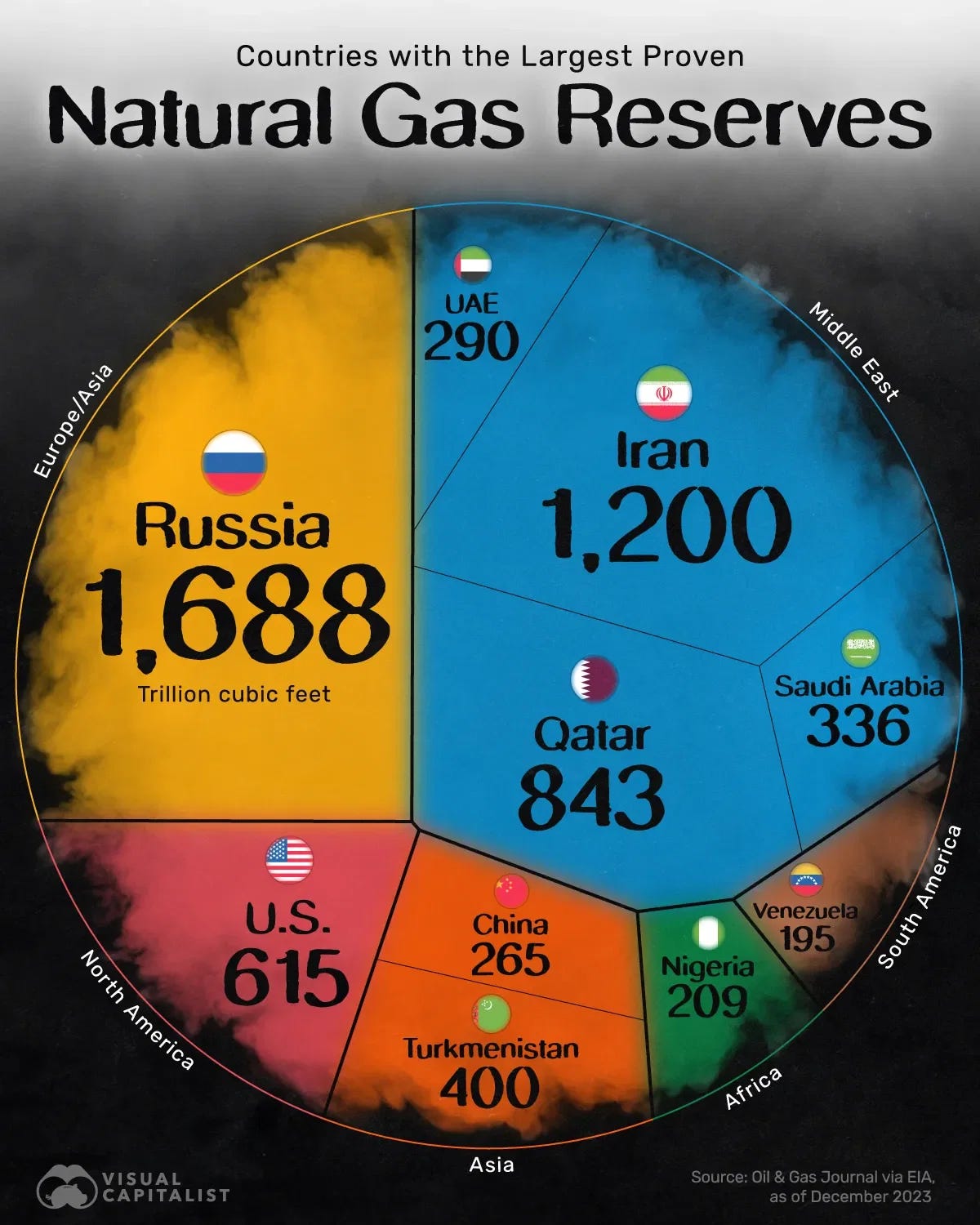
The US has achieved export superiority by making significant investments in pipelines and LNG facilities.
It’s one thing to have gas in the ground, but it’s a while ‘nother thing to get the gas out of the ground and transported around the world.
Countries with largest liquefied natural gas (LNG) export capacity in operation worldwide as of September 2025
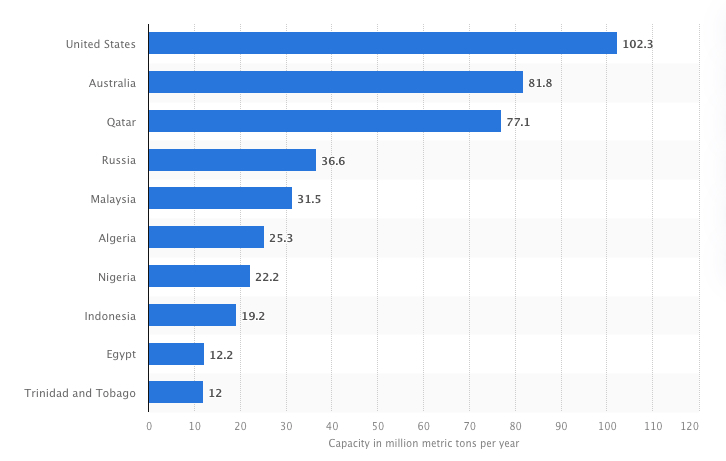
Source: Statista
NOTE: Qatar’s past and future role is extremely important, and I will touch on that in just a moment.
This US dominance is a relatively new development over the past decade and shows no signs of stopping soon.
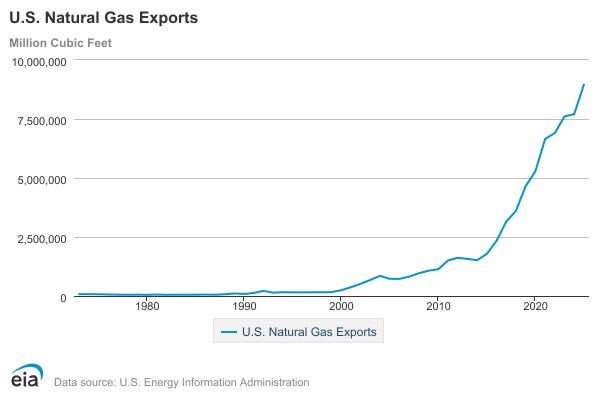
About 40% of these exports flow through pipelines to Canada and Mexico, while the other 60% is transported via LNG ships around the world.
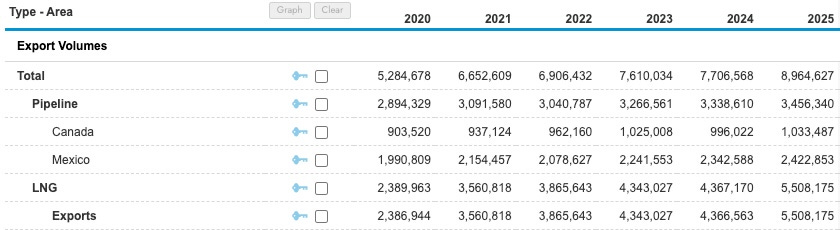
What’s interesting about these exports is which countries are receiving these shipments.
Nearly every major economy in Europe has become extremely reliant on US natural gas.
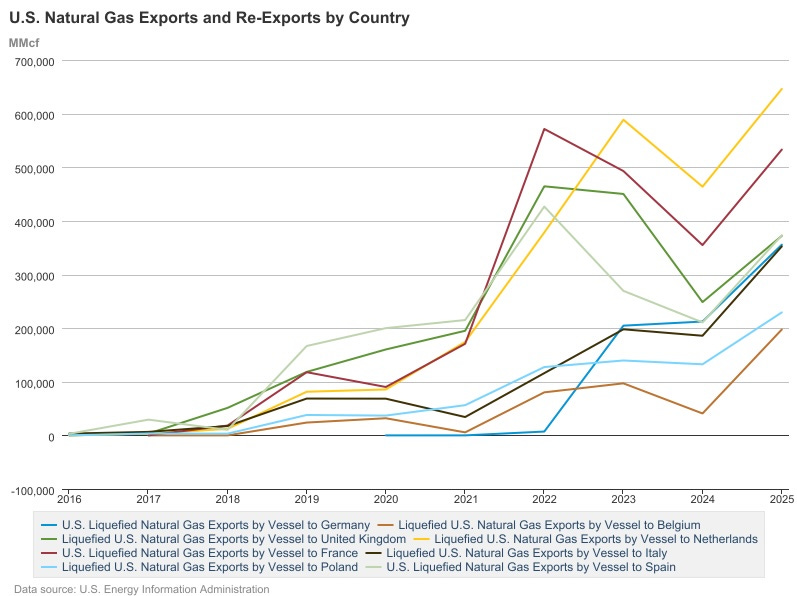
It would appear that European nations are becoming more and more dependent on the United States for more than just military might.
Europe is now reliant on US energy too.
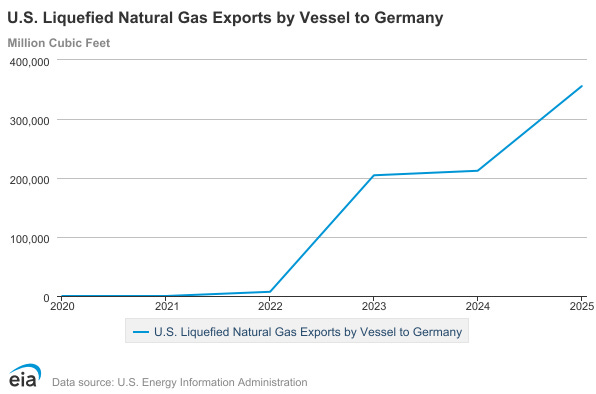
And there is one country in particular that is especially notable: Germany.
Their US LNG imports have transformed since 2022.
The same year that the Nord Stream pipeline was blown up.
In case you don’t remember what happened back in 2018, I highly suggest you watch this 1 minute video from C-SPAN here.
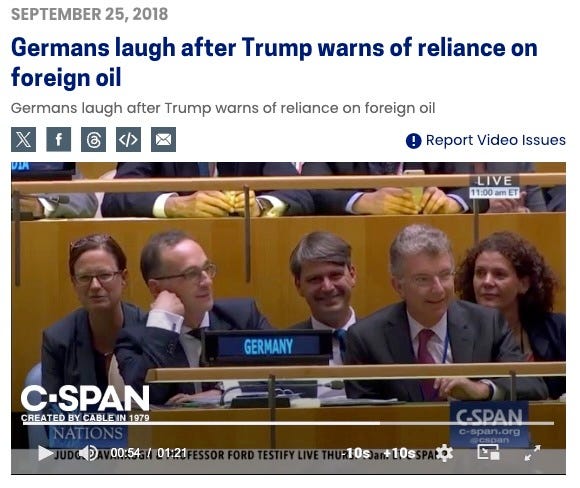
Source: C-SPAN
These same laughing Germans also shut down all 17 of their operating nuclear power reactors between 2011 and April 2023!
Are you getting it yet?!
It doesn’t matter if it was the Russians, the US, or the Ukrainians who blew up Nord Stream.
It doesn’t matter that the Germans and most of Europe have committed energy suicide.
What matters now is that they are all reliant on US natural gas.
But, wait - it’s not just Germany.
There’s more!
Strategic Foreign Entanglement with US Natural Gas
Over the past century the United States has used foreign aid and foreign investment to create codependent relations with many subservient nations.
European countries pursued the same strategy several centuries before, especially throughout Africa.
This was knowns as the “Scramble for Africa” with Belgium, France, Germany, Italy, Portugal, Spain and the United Kingdom divvying up different parts of the African continent to exploit resources, labor, and trading ports.
Today, the Chinese are the most proactive with this strategy, which they call the Belt and Road Initiative, having pursued projects throughout much of Latin America and Africa. (I explained this in depth a couple weeks ago.)
But now the US is turning this strategy around on its head.
Instead of exploiting resources in foreign nations for the benefit of the US, the US is now exporting domestic resources to foreign nations to make them dependent on the US.
That is what is happening with natural gas.
Just above, I already showed you what’s going on in Europe.
Nearly every European country has dramatically increased their reliance on US sourced LNG.
Japan and South Korea
In Asia, the story is similar for Japan and South Korea.
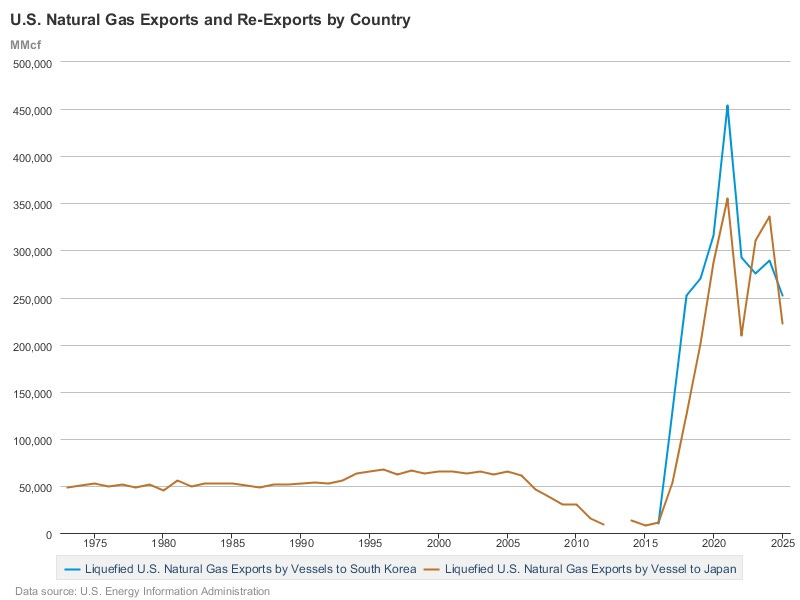
What’s most interesting are the countries that the US has recently engaged with.
These are the countries that are obvious players in the broader geopolitical chess game:
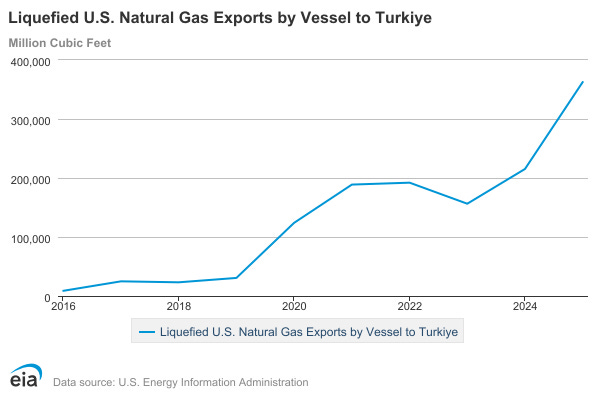
Turkey
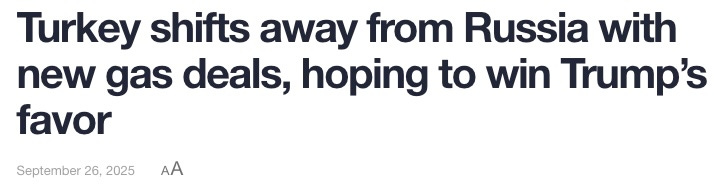
While this situation could be an entire article on its own, the shift for this country comes as a surprise as recently reported by the Nordic Monitor.
Even though the majority of natural gas for Turkey is supplied via pipeline from Russia, Azerbaijan, and Iran, it’s clear why the country is turning to the US for energy security.
Now making up close to 17% of it’s total natural gas imports, supplies from the US to Turkey could continue to increase in the coming years.
Side note: Turkish military operations in Syria also relate to natural gas pipelines.
Taiwan
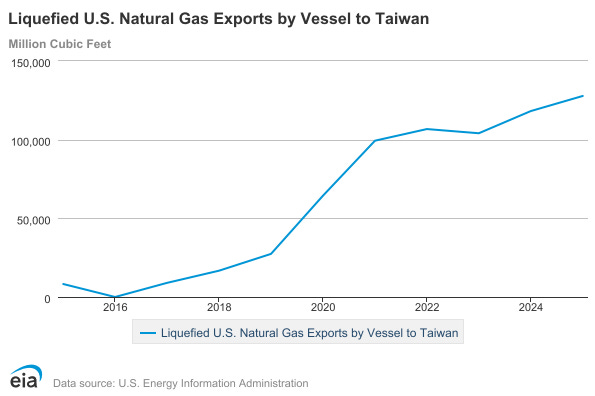
There is an obvious reason why the US is supplying Taiwan, which I won’t dive into here.
As of last year, Taiwan received most of its LNG from Australia, Qatar, and the US. With supplies from Qatar now in question, it’s clear who could take up some of that slack.
Egypt
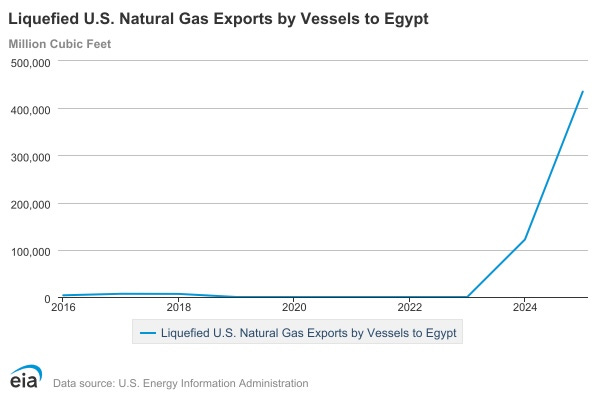
Considering its close proximity to the gas rich Gulf States, it may be surprising to see the dramatic increase of US LNG imports to Egypt.
In 2025, the US supplied more than 90% of Egypt’s LNG imports.
Notably, Egypt recently signed an MOU with Qatar for LNG imports. But since Qatar just declared force majeure into July, this is now an uncertainty.
Panama
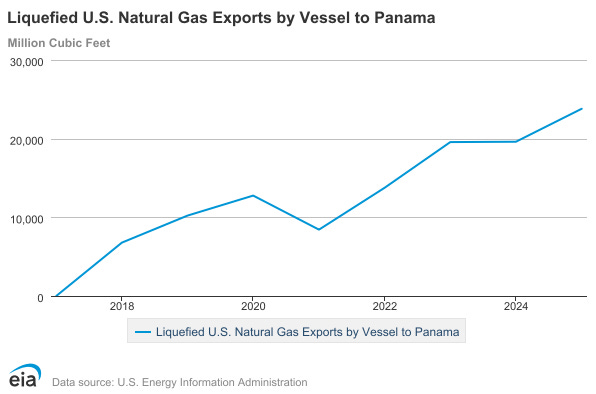
Although Panama is a tiny customer, relative to other LNG consumers, this increase shows the commitment that the US has to ensuring strategic allied nations remain aligned.
Rest of the World
I only highlighted several of the notable countries above, but the list of other countries that have increased their LNG imports from the US include:
El Salvador
Lithuania
Finland
Greece
Bangladesh
Senegal
Many more
Most of the world is addicted to natural gas and the United States reigns supreme as the global distributer.
How Does This Reverse Course?
In the short term, it can’t.
Within the US, over 40% of electricity is generated by natural gas, followed by nuclear (~17%), coal (~17%), and renewables (wind, solar, hydro) making up the rest.
Globally, the breakdown isn’t too different.
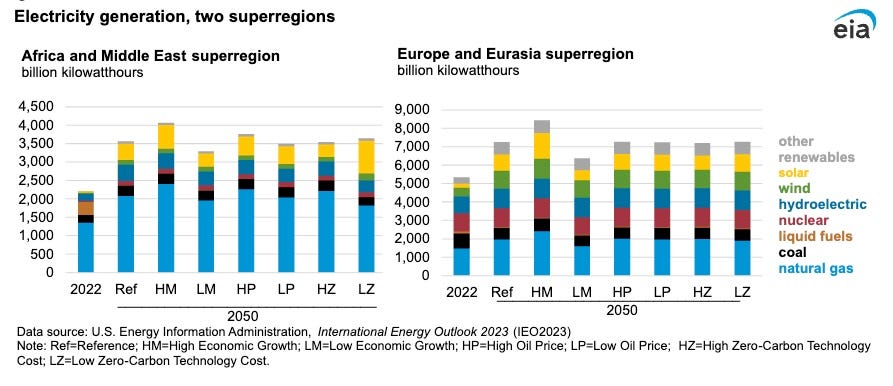
The US and most of the world needs natural gas.
And while there are many global regions that are rich with natural gas resources, there are few that are able to transport the gas from the ground to their final destination.
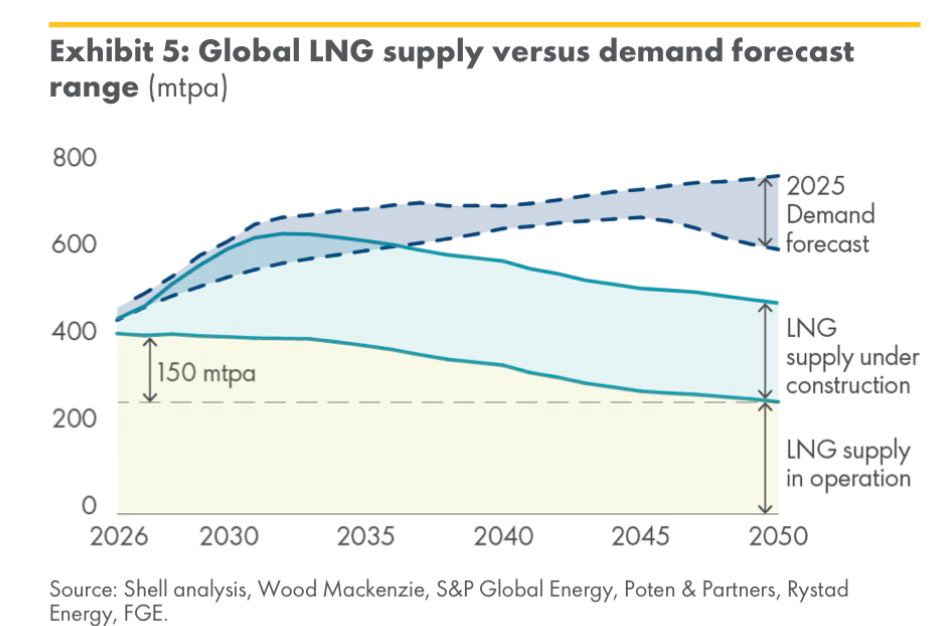
To make matters worse, the capital investments and time required to build out LNG facilities are enormous.
A small disruption in LNG supply can dramatically impact the global energy market.
And that’s exactly what just happened in Qatar, which is responsible for approximately 20% of the world’s LNG supply.
Two of Qatar LNG’s mega-trains (the large equipment that cools natural gas into liquid form for transportation) were struck by Iranian weapons, eliminating 17% of the companies production ability.
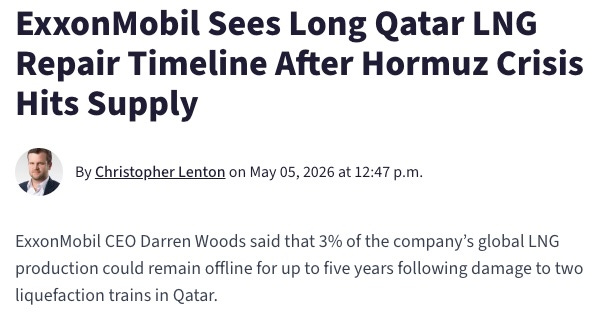
This damage, in addition to the Strait of Hormuz being closed, has destroyed Qatar’s ability to export LNG.
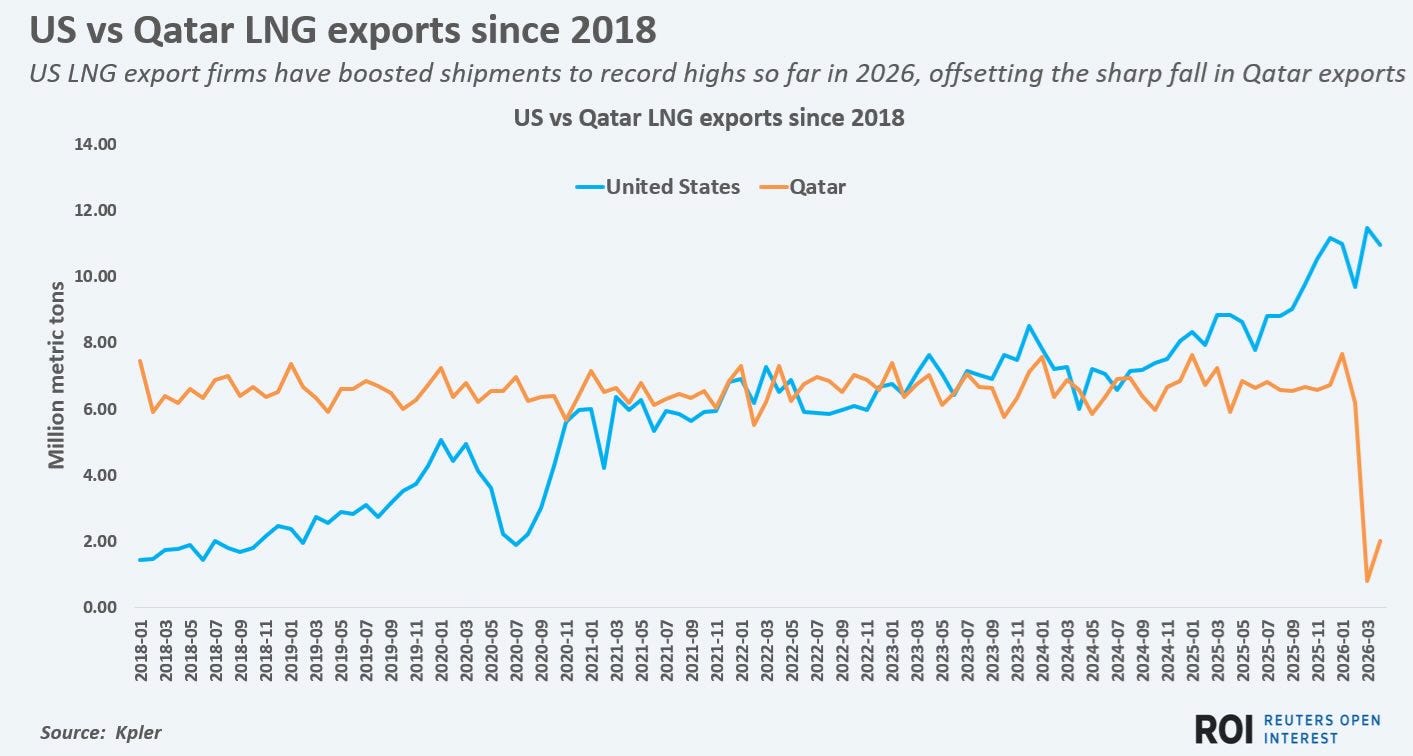
While it’s possible that exports could resume soon, it’s also possible that they don’t.
Beyond Qatar, there is likely damage at other natural gas facilities too, like the Habshan Complex in the UAE.
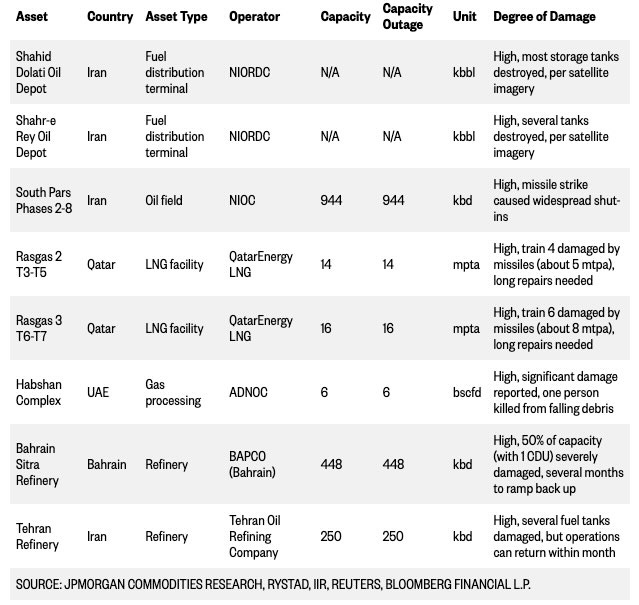
This would all put enormous strain on the global LNG market, which is already forecasted to grow dramatically from the US perspective.
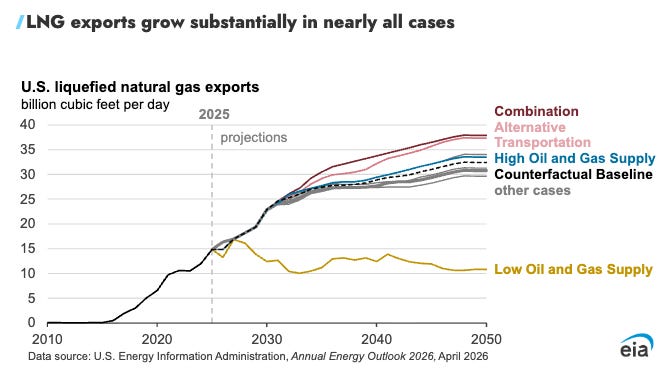
And, of course, that doesn’t even take into account additional demand for the United States’ domestic needs.
Like data centers.
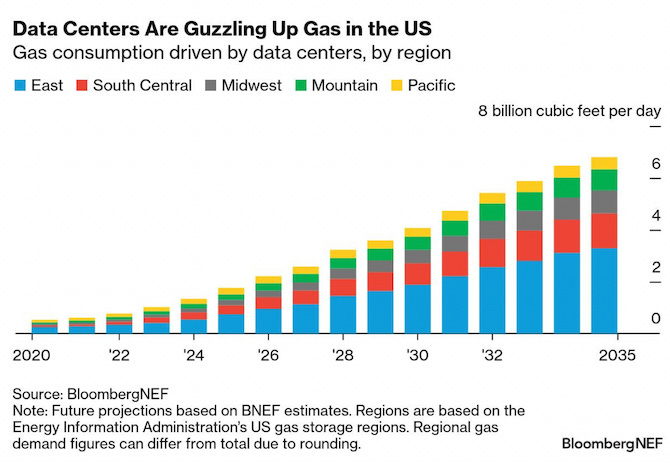
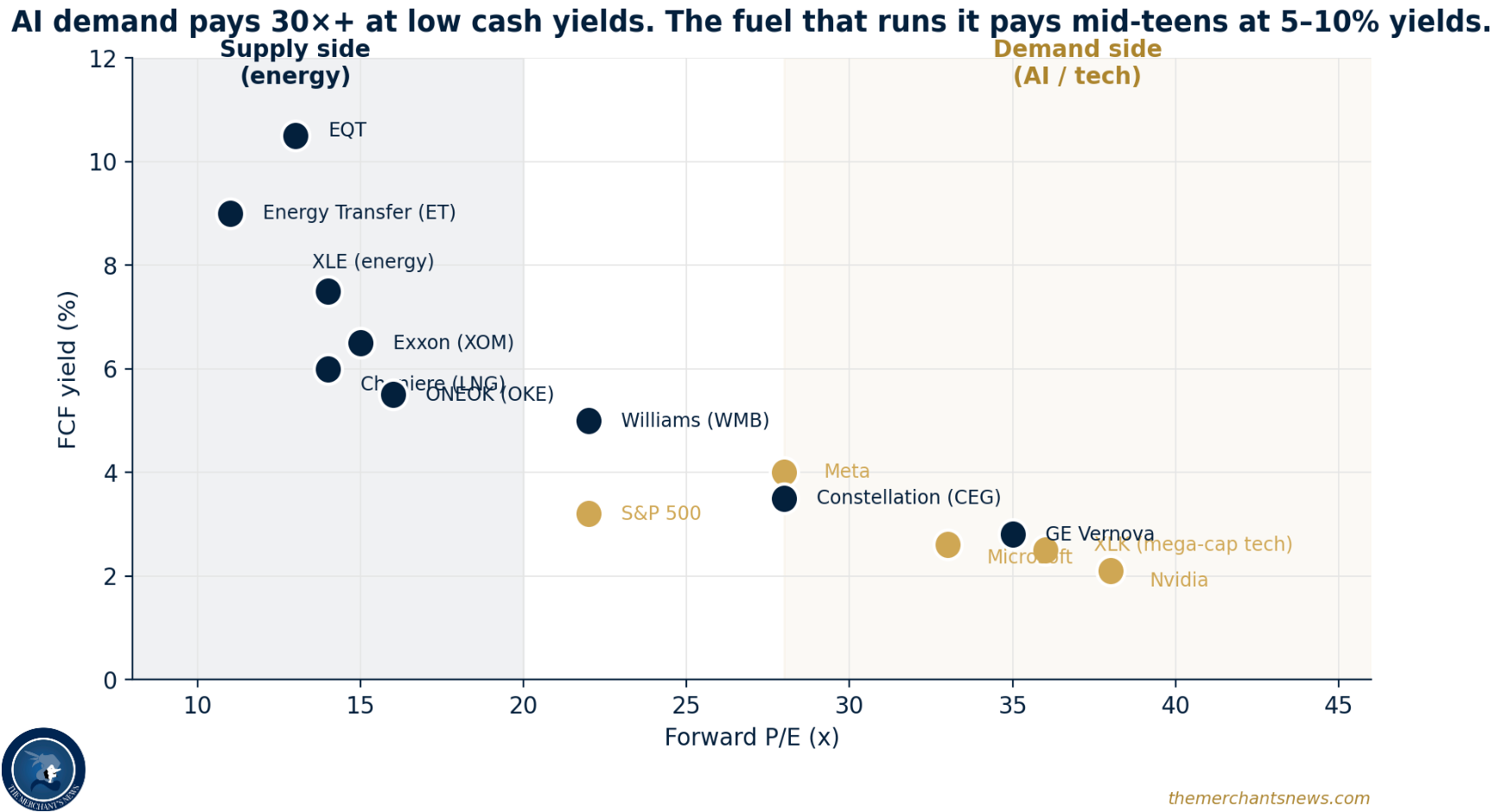
Further Reading: Giacomo Prandelli wrote a fantastic article about the natural gas demand from data centers that just adds to everything I’ve already said. His thesis summarized is, “The market is paying high 20s to mid 30s earnings multiples for the demand side of the AI trade and mid 10s or less for the supply side that makes the compute physically possible… That is the trade.”
How to Invest in the Natural Gas Entanglement
At this point, a monkey with a dart could probably pick a winner in the natural gas industry.
That’s because almost all of the producers are dirt cheap, and the rest of the industry isn’t too bad either.
Producer names like EQT EQT 0.00%↑, Antero Resources AR 0.00%↑, Range Resources Corp RRC 0.00%↑, and Expand Energy Corporation EXE 0.00%↑ have single digit P/E valuations and can sustain operations with very low natural gas prices.
This is in stark contrast to the companies that rely on this energy, as Giacomo shared in his article so well:
And what about actual natural gas prices?
This is the more complicated part, which we will see developing over the next couple of months.
Here’s what’s going on: The US actually has a glut of natural gas, as increased oil drilling creates more supply of natural gas, especially in the Permian.
The problem is that export capacity is near tapped out. The existing LNG export facilities that are based in the US, Mexico, and Canada cannot export much more than they already are.
This creates a situation where natural gas within the United States is cheap, while other countries have to pay drastically higher costs.
“The crisis has exposed a major split in the global gas market: Import-dependent countries across Europe and Asia are scrambling for scarce supplies, but the United States - the world's largest gas producer, consumer and exporter - remains awash in fuel, with prices near 17-month lows. But U.S. pipelines are full and LNG export plants are at capacity, so that cheap U.S. gas cannot reach overseas buyers, creating a bifurcation much more stark than in the oil markets.” -Reuters
Venture Global VG 0.00%↑ and Cheniere LNG 0.00%↑ are positioned to do very well from this situation, as they are the largest LNG companies in the US.
The problem with these two companies is that high fuel costs (for shipping) and long term contracts can limit some of their upside.
But that’s just splitting hairs.
Several years from now we’ll probably all look at this whole situation with crystal clear hindsight.
If it produces, refines, processes, ships, or somehow sells natural gas, it’s probably a buy right now.
We’re looking at a US stock market that is literally trading at all time high valuations, during a war over energy, while one of the most important energy sources in the world is trading for fire sale prices.
Just be ready for volatility - there’s a reason why natural gas investing is known as the widow maker!
If you made it all the way to here, do me a favor and drop me a ❤️ or repost 🔁 this.