The j Shaped Economy - A Wall of Worry, or Euphoria?
Chasing the gains and ignoring the value - it's an interesting strategy.

About 1,500 years ago while the Mayans were founding Chichen Itza, Rome was getting sacked by the Vandals.
These two events, which transpired on the same year in 455, symbolized both the beginning and fall of two different empires.
Were the Mayans thinking about conquering the Romans when they founded Chichen Itza? Were the Romans concerned about the threat of the Mayans while Rome was getting sacked?
Of course not.
These two different civilizations were on complete opposite sides of the world. Neither society had ever interacted with each other. They hardly knew what existed beyond their kingdom borders.
In modern times, it seems that similar scenarios are reversed.
A government change in an Asian country can impact the economy in a Latin American nation. A nickel mine disaster in Indonesia can disrupt the electric vehicle industry in Norway. The assassination of a single person; the sinking of one boat; the decisions of a tiny few - each could lead to a World War.
It’s incredible how interconnected our world has become.
A single idea can have a butterfly effect that ripples through a society, into an economy, and then make its way to a battlefield.
In 2026, this trend of globalization seems to be reversing again, back to a world where the Mayans and Romans don’t give a rat’s ass about each other.
The Lower Case j Global Economy
There has been much written about the ‘K-shaped economy.’
This scenario is where economic outcomes diverge, with the upper class and technology sector accelerating higher, while the lower class and industrials struggle with high inflation and debt.
One of the best visualizations of this playing out in real time is the performance of the Nasdaq compared to the company Home Depot:
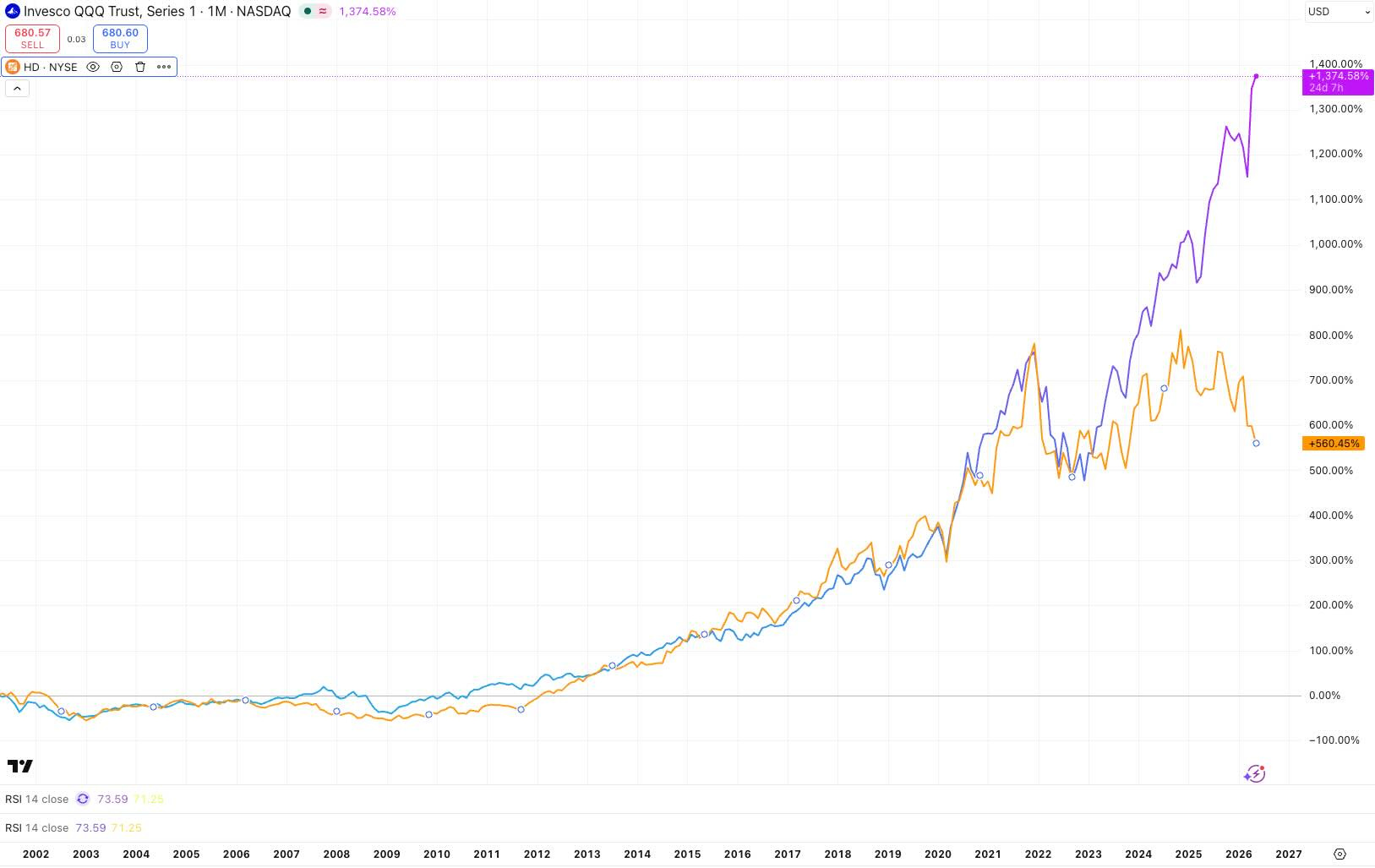
The divergence is stark, especially when you look at the long term correlation.
My friend Wyatt Sparks, from Sea Meadow Capital, proposed a possibly better description of what’s currently playing out: the lower case ‘j’ economy, where the dot of the ‘j’ represents the small minority of the world benefitting from rapidly appreciating tech assets.
Will that dot above the hooked ‘j’ continue to drift higher?
Or will it fall down and land in that j’s hook?
Valuing the Dot Cohort
If you asked anyone in the dot cohort, who has been the beneficiary of AI’s meteoric run, they’d probably argue that there’s much more runway ahead.
So far, they’ve been right. And they’ve put their money where their mouth is:
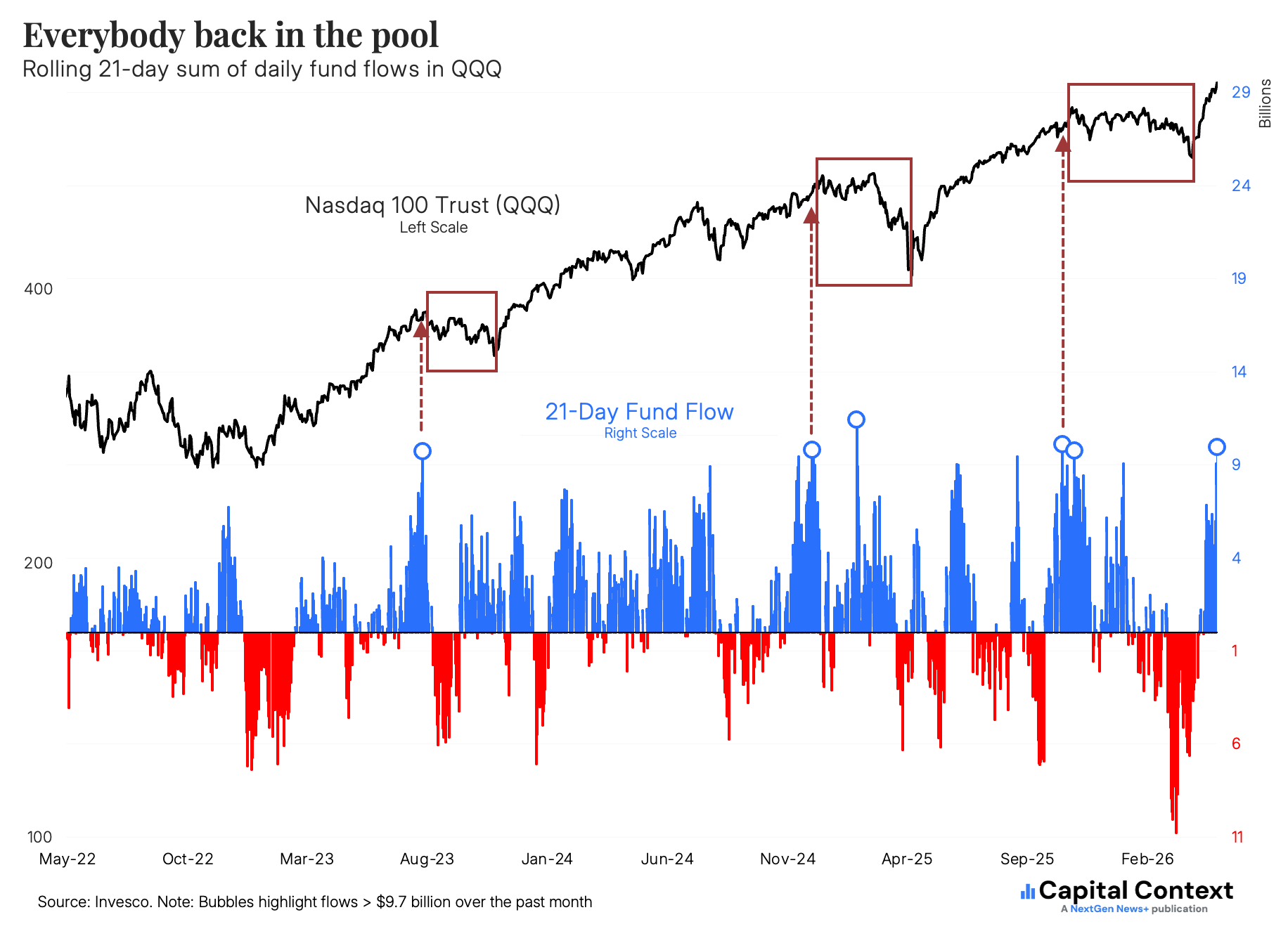
But like a game of musical chairs, the music has to stop at some point, right? Right?!
That’s what hedge funds may think, as most recent data shows that big players may be banking some of their big multi-year wins.
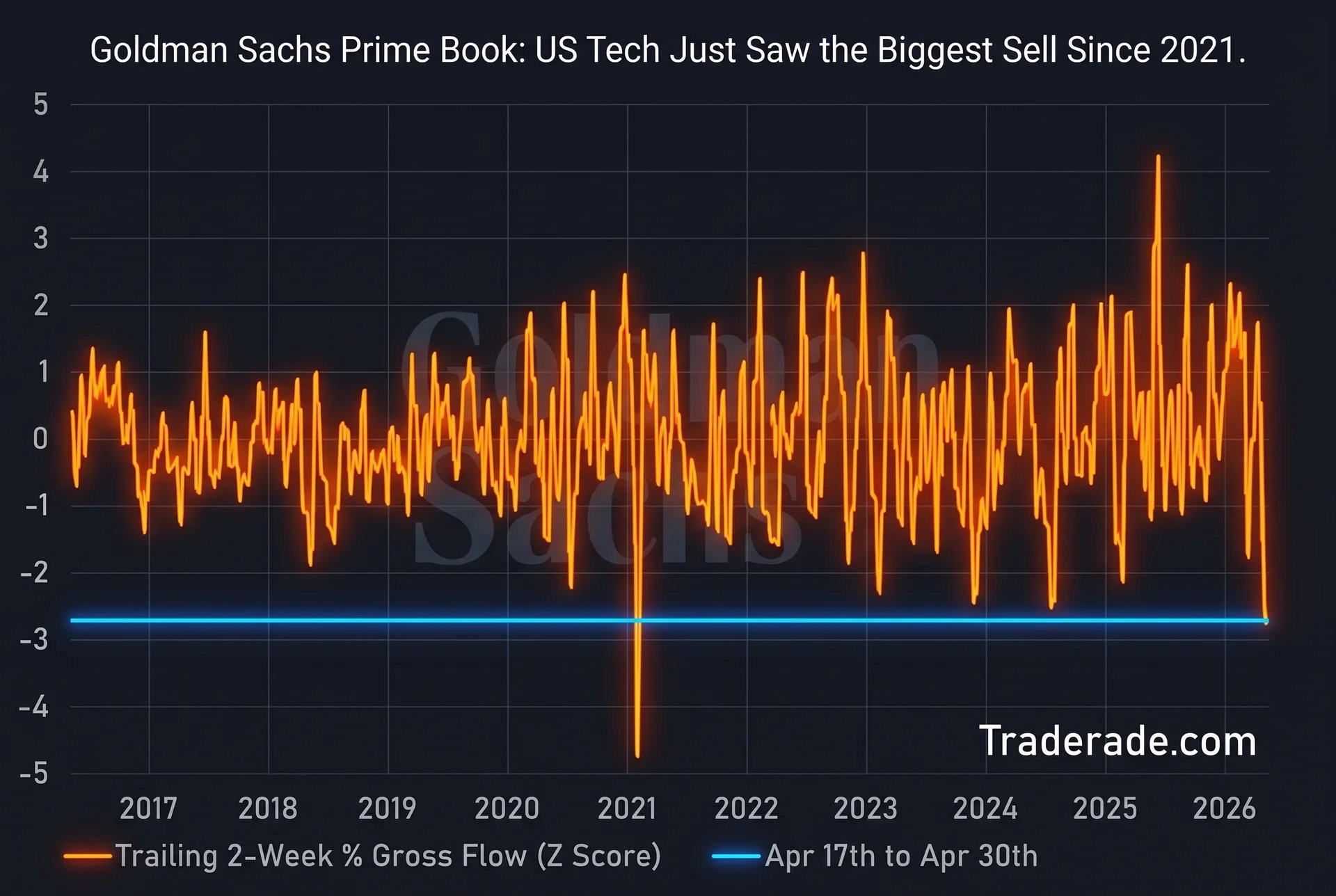
So why would some investors pile back into the market, while others (arguably the more sophisticated ones) are exiting?
Beyond valuations, which I’ll mention just below, it might be as simple as looking at the adoption curve.
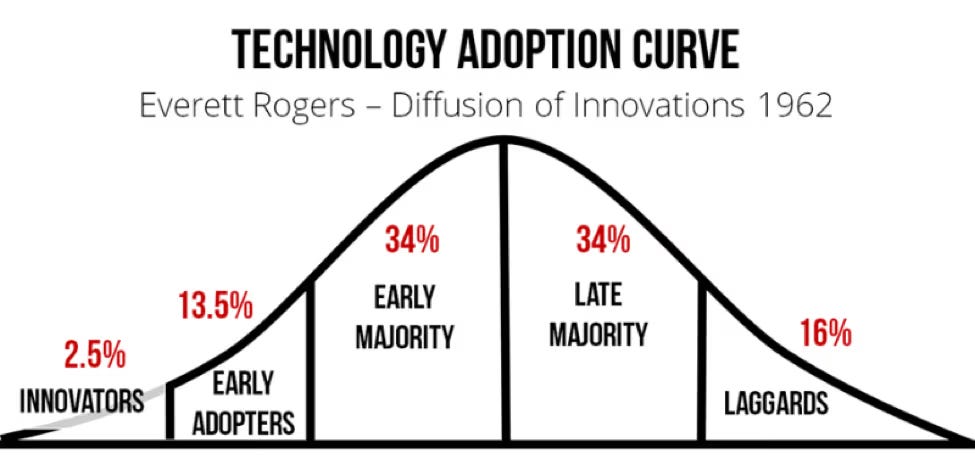
Just like it takes 50% of a population to join a new trend, after that trend has peaked, investors can follow a similar path.
Conservative investors typically wait for confirmation that a specific trend is in place and established. By avoiding early trends, risk is assumedly decreased by avoiding any speculative opportunity.
That’s why specific trends tend to concentrate in a small number of opportunities, or companies, within that trend.
The late majority waits for confirmation, and then when they see the confirmation, they pile into the household names.
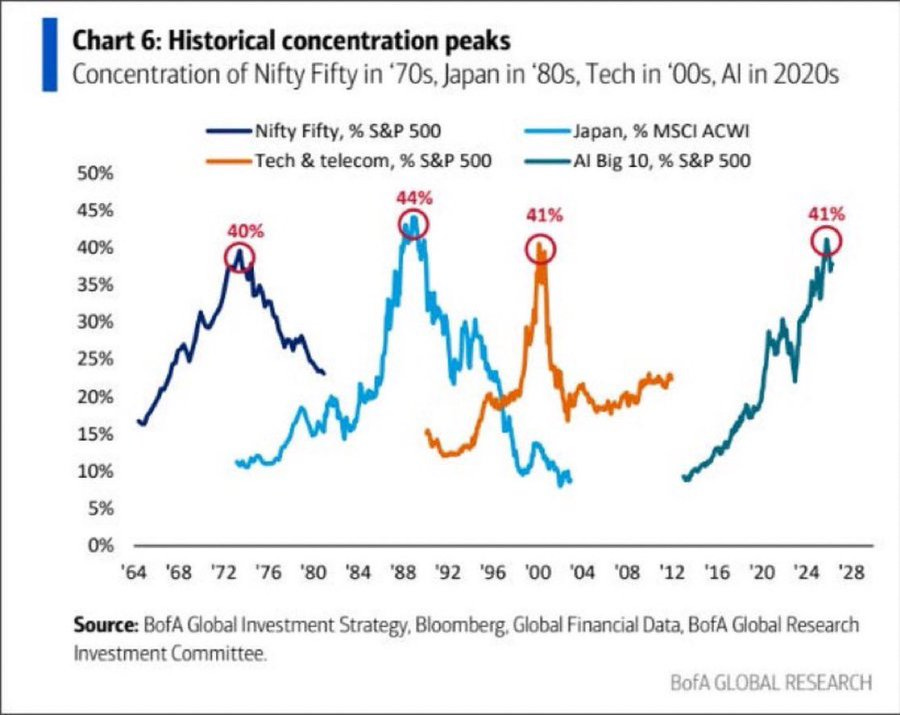
Of course, you as a savvy investor, sees the obvious risk here.
By waiting for confirmation, and then entering the arena, you’re actually missing the exact opportunity which you are intending to exploit.
To make things even worse, the confirmation, which is usually quantified by past numerical appreciation, ignores valuation.
Speaking of valuations…
Never Been More Expensive
That’s quite a subheading. But it’s true, according to the (in)famous Buffett Indicator.
Statistically, the market is forecasted to return a negative 1% return over the next year.
But AI! This time is different! Money printer go brrr! Fed lowering interest rates! AI is deflationary! Peace coming to Middle East! Robotics!
Yes. Maybe that’s all true.
But so is all of the above.
And the j-shaped economy is very real for many people around the world.
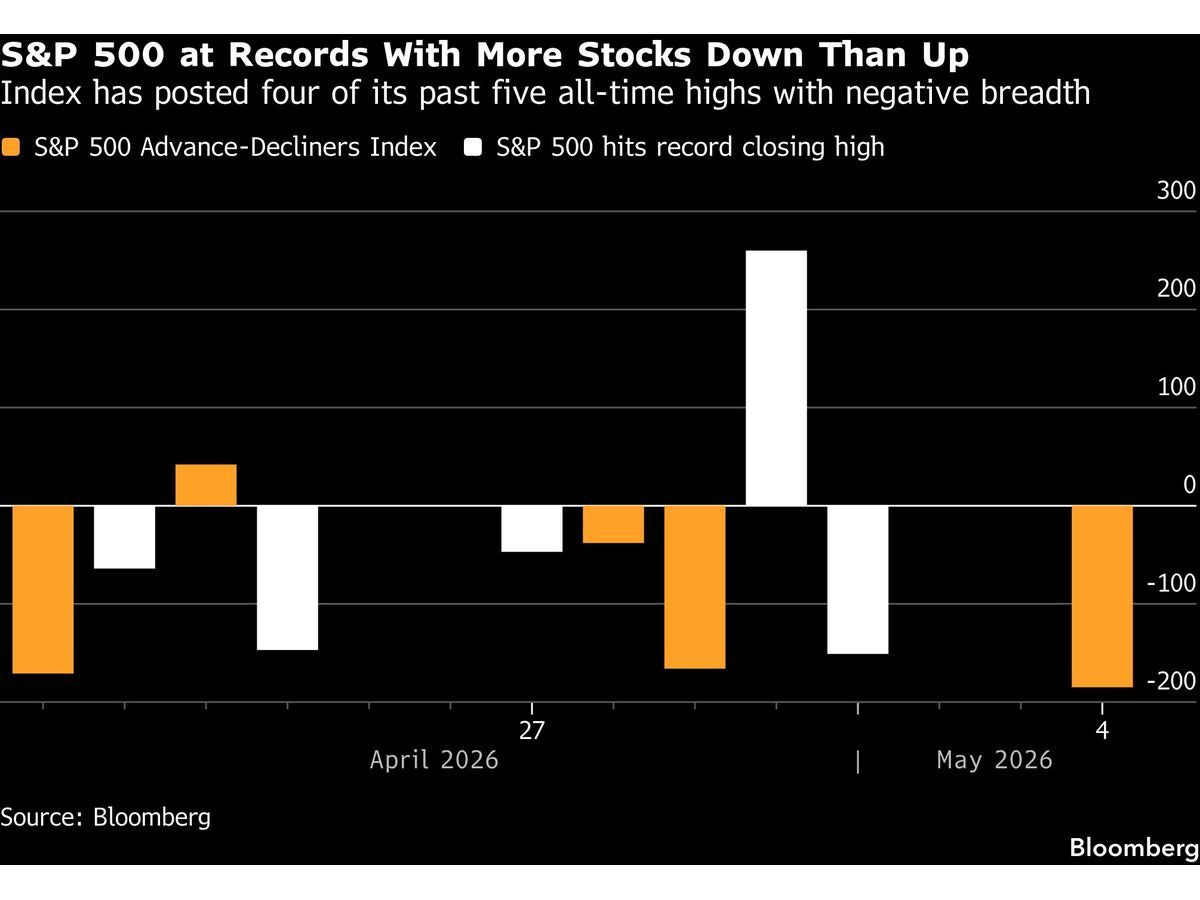
What comes next, with surging energy prices yet to fully flush through the global economy, is anyone’s guess.
Despite all of this, there are still opportunities around the world. And two of them are where demographics are excellent (more on that soon)…