

The Ultimate Guide to Investing in Cuba (before and after the 'change')
If historical falls of communist countries are any indication of profits, Cuba could provide enormous upside for savvy investors.

One of the most famous stories of a foreign investor making billions of dollars from the fall of a communist country is that of Bill Browder and his firm Hermitage Capital Management.
Starting in the mid-1990’s Hermitage was able to transform their initial $25 million of seed capital into over $4.5 billion by investing in Russian state-owned assets that were being sold off for pennies on the dollar.
As you can probably imagine, the full story of this financial win is not without significant risk and drama. Browder ended up writing two books - Red Notice and Freezing Order - which detail the financial strategies, corruption, and even murder that unfolded during this time period.
Fast forward to 2026 and there are two more similar stories developing, with many of the profits, and tribulations, yet to be revealed.
The first story, which has miraculously fallen out of focus due to current geopolitical conflict in the Middle East, has to do with Venezuela and the United State’s dramatic capture of Maduro.
The Venezuela Parable
Literally overnight, the trajectory of Venezuela and its people immediately changed as Maduro’s ouster signaled the fall of a regime and the opening of opportunity.
Whether or not the direction of Venezuela will dramatically change in the coming years is yet to be determined, but there have already been enormous financial wins for those properly positioned.
However, unlike the story with Browder, many of these enormous profit taking events in Venezuela are very unlikely to make the news anytime soon… Or ever. That’s because those involved in making these investments are equally interested in their ability to fly under the radar as they are in the actual upside.
Just as an activist investor like Bill Ackman thrives on public exposure and shifting market sentiment, other investors succeed by pursuing the exact opposite strategy.
Despite the many unknown deals currently being structured in Venezuela, there is one public company that has already seen massive success. My good friend Swen Lorenz has written about this opportunity many times, and another friend (who shall remain nameless) is a major shareholder. I’m taking about the gold mining company Gold Reserve.
It’s story is long, complicated, and can be summed up simply by a recent company presentation:
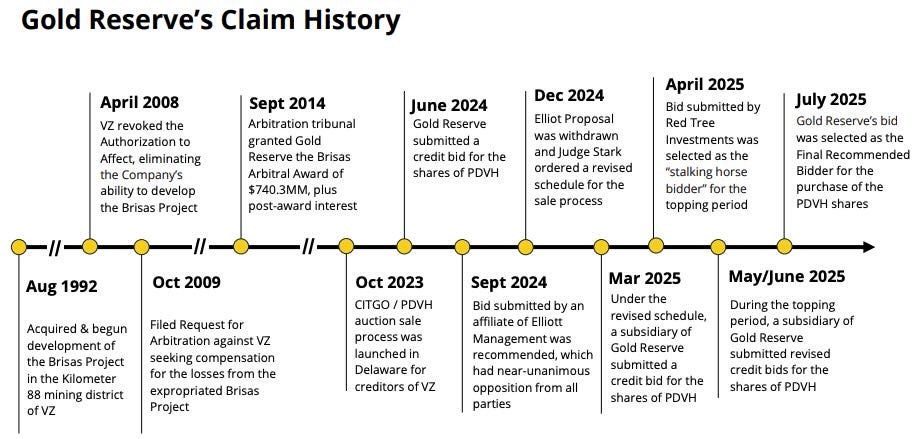
Of course this timeline only goes until July of 2025, which was the same month the company went public on the Bermuda stock exchange. And most importantly, this was all before the capturing of Maduro.
On January 3, 2026, which was a Saturday, U.S. Special Forces captured Maduro in Caracas, Venezuela. Gold Reserve’s US OTC listing had closed the previous day at $1.68 per share.
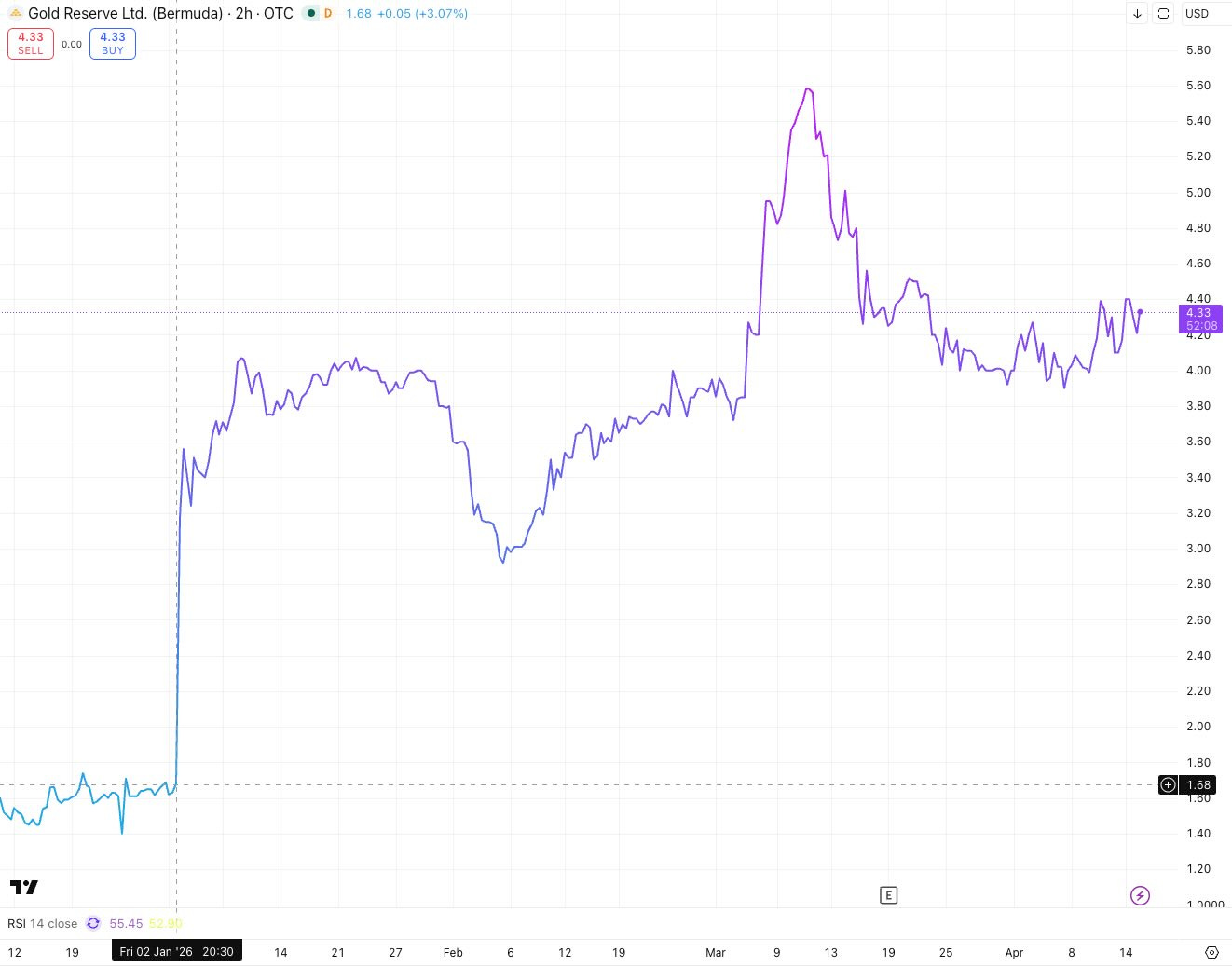
On Monday’s market open, the share price rocketed to over $3.50, and then peaked in March at $5.58 per share, representing a 232% gain in a little over a month.
Obviously this jump in share price was pure speculation. Nothing material had changed in the company itself and investors were simply betting on the momentum fueled geopolitical event.
Or maybe not?
While it’s true that Gold Reserve didn’t discover a new gold mine overnight, it’s also true that their claims on Venezuelan territory could all of a sudden be much more exploitable. Maybe the company’s share price is still undervalued? I know that major shareholders haven’t jumped ship yet…
Anyway, you now understand how opportunities in Russia and Venezuela can uncover themselves in a matter of days, and have billions of dollars worth of profit potential for savvy and adventurous investors.
Could the same scenario be playing out in Cuba right now? Could Cuba be the next emerging market that early investors will have major windfalls from?
There is certainly a lot of chatter about the Cuban regime falling, or at least changing directions significantly. Trump has made a variety of “Cuba’s next” comments after his moves on Venezuela and Iran. Should we doubt his words and chalk Cuba up as a another TACO? Or is he serious, and is there reason to position yourself now for a new open Cuban economy?
Cuba - A Capitalist’s Dream?
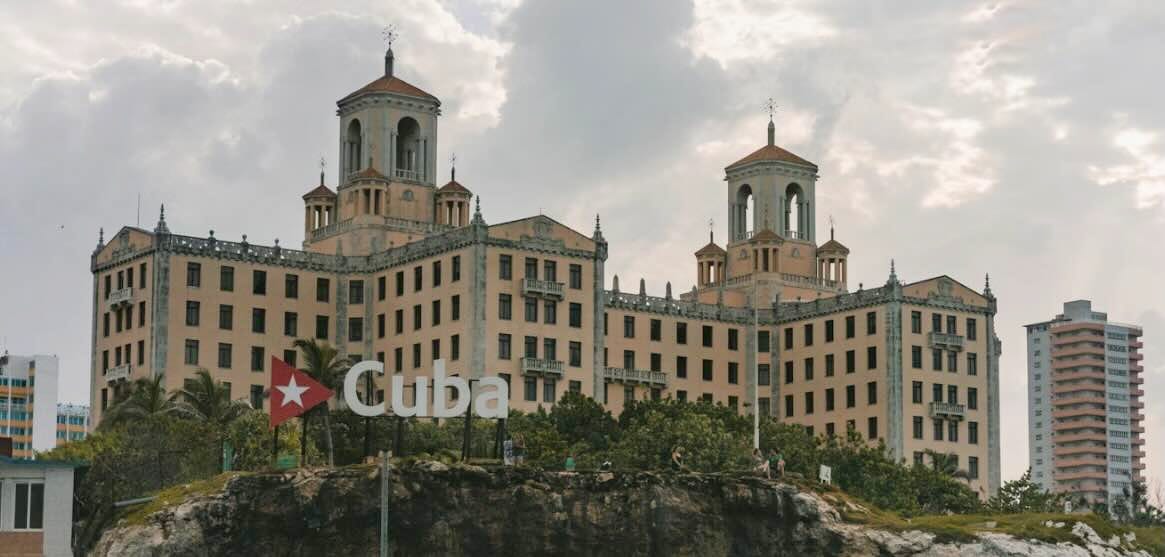
To be clear, Cuba is currently a capitalist’s nightmare. There is nothing about Cuba, in its current state, that is attractive to an investor who believes in free market principles… Except for one thing: If Cuba returned to it’s pre-1959 economy, capitalist investors would be able to seize on a moment of blank slate opportunity.
They’d be able to enter a country with vast mineral and energy resources, a surprisingly advanced biotech industry, fantastic tourism potential, and most importantly, a (literally) hungry workforce that is craving opportunity.
Please note that nothing you will read below has to do with the current state of Cuba and how the country got to where it is today. You also won’t read anything about the tumultuous relationship that Cuba has had with the United States, or any other country for that matter.
Instead, I am focusing purely on investment opportunities that are currently available for investors, and investment opportunities that may soon become available if the country’s current regime is to change.
What you’ll find below is an in depth guide that explores the diverse landscape of Cuban investments as of April 2026.
Following recent reforms, including the historic decision to allow the Cuban diaspora to invest directly in private enterprises, the risk-reward profile of the island has shifted significantly.
I have organized opportunities ranking from ‘currently available with minimal risk and partial exposure’ to ‘possibly soon available with considerable risk and major exposure.’ This ranking means that the companies and opportunities listed first are generally much more liquid and widely available compared to the later part of the list.
Likewise, this listing order also indicates possible risk and reward. Investments that have less direct exposure to Cuba will have less risk, but also less possible reward. The opposite is likewise true.
Let’s dive in…
The Indirect Exposure Plays
Companies in this section could benefit from positive Cuban economic activity without having significant physical assets on the island. Generally speaking, this would mean that no positive developments in Cuba wouldn’t really effect these companies at all, while any sort of increased business activity with the island would add directly to the bottom line of these companies.
Airlines
This is the most obvious sector to possibly benefit and could be an entire investment case on it’s own. I’ll stay relatively high level here, just touching on what airlines currently do business with the island.
First, it’s important to point out that Cuba actually has a pretty busy and developed airport industry. The island has six airports that each service international flights: Havana, Varadero, Santa Clara, Cayo Coco, Camaguey, Holguin, and Santiago de Cuba.
Havana is the busiest airport and has international flights that go to the US, Mexico, Canada, Panama, Colombia, Venezuela, Germany, France, Italy, Spain, Turkey, Cayman Islands, Guyana, and Angola(!).
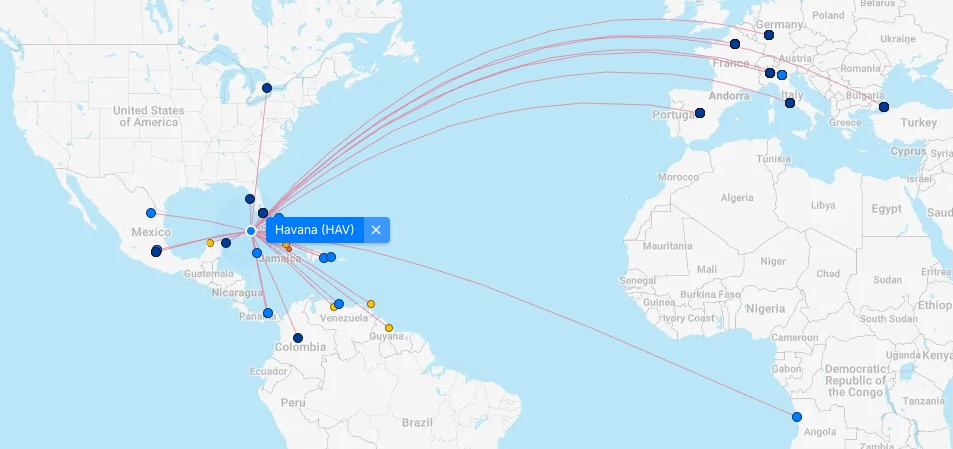
Many of these international flights are serviced by a wide variety of airlines (Turkish Airlines, Iberia, Air France, etc.), so don’t represent a meaningful relative amount of those carriers total destinations.
Perhaps somewhat surprisingly (but not, because of proximity), it’s the US airlines that have the most daily flights to and from Cuba. Although United ( UAL 0.00%↑ ) , Delta ( DAL 0.00%↑ ) , JetBlue ( JBLU 0.00%↑ ) , and Southwest ( LUV 0.00%↑ ) all fly to Cuba, it’s American Airlines ( AAL 0.00%↑ ) that dominates the route accounting for nearly 80% of all US/Cuba travel. American operates about a dozen flights a day and flies into all six of the Cuban airports previously mentioned.
The next closest airline, operating 3-4 flights per day, is Copa Airlines ( CPA 0.00%↑ ), which is Panama’s flagship carrier. Copa operates the primary regional airport - known as the "Hub of the Americas" - in Panama City.
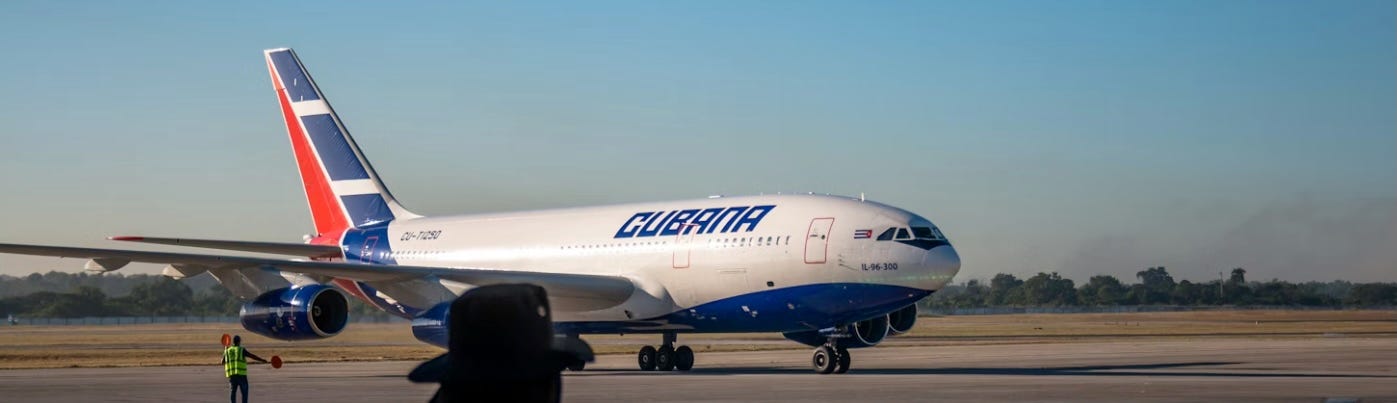
Cuba does have their own airline, Cubana de Aviación S.A. or better known as ‘Cubana,’ but it’s state owned and has had all sorts of problems, as you can imagine.
Cruise Lines
Potentially offering more upside than airlines, cruise operators could benefit meaningfully in the event Cuba opens up further and relations improve with the United States.
Beyond an increase in customers, cruise lines may benefit as their clientele may prefer to rely on the infrastructure of the actual ship (i.e. power, plumbing, safety, etc.) versus land based hospitality. This is not to say that there aren’t incredible hotels and resorts in Cuba (there are, and we’ll talk about them a little later).
However, what’s most important right now in 2026, is that there are currently no publicly traded cruise lines servicing Cuba.
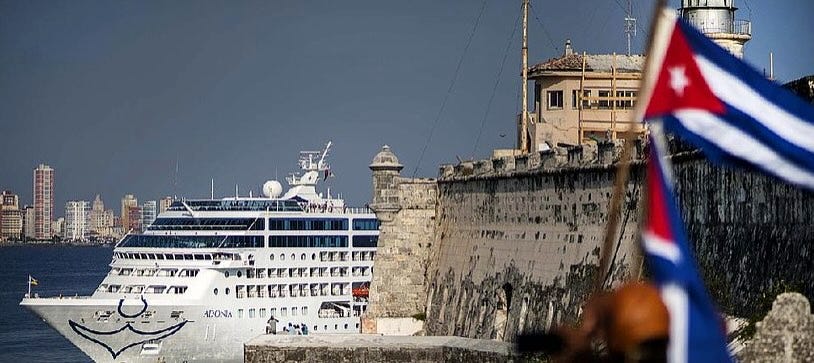
In the past, Royal Caribbean ( RCL 0.00%↑ ), Carnival Corp ( CCL 0.00%↑ ), and Norwegian Cruise Line ( NCLH 0.00%↑ ) have included Cuba as one of their destinations, but over the past several years, for a variety of reasons, they have eliminated Cuba from their itineraries.
There are some private cruise lines that have occasional stops on the island, but their schedules aren’t consistent and they’re mostly private equity backed.
In the event that Cuba’s tourism industry expands to re-incorporate cruise services, the three public companies listed above could have meaningful upside.
Consumer Brands
The situation with consumer brands that are sold in Cuba is very complicated. While there are many global brands present on the island, their operations are typically structured as joint ventures with the Cuban government or managed through third-party distributors from other countries.
That means the variety and penetration of various consumer brands are ever changing and unreliable. Still, mega-corporations like Nestle, Unilever, Coca-Cola, and Colgate are present in Cuba.
However, with a total population of about ten million, the entire country of Cuba does not make up a consumer base to significantly impact those large multi-national brands. I don’t think, even with a full opening of the country, any of those companies would have meaningful impacts.
That said, there are two industries worth mentioning because of their direct relations with iconic Cuban brands.
The first is Pernod Ricard ( $PDRDF ). I’ve mentioned this company before, as it relates to the declining alcohol industry and the possible merger this company could soon be going through. Putting that information aside, Pernod Ricard operates a 50/50 joint venture with the Cuban state-run company Cuba Ron S.A..
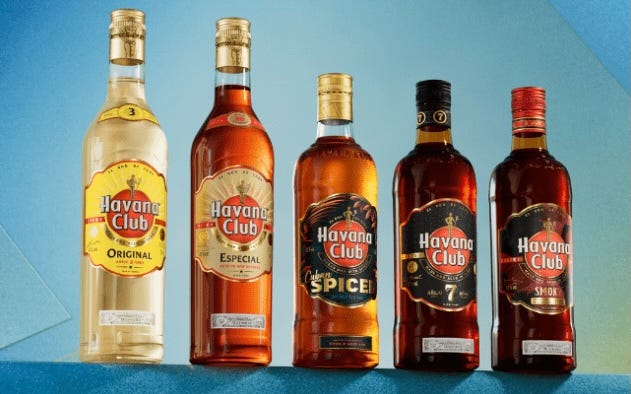
Cuba Ron acts as the producer and manages the entire production process within Cuba, from harvesting sugarcane to distillation and aging. Meanwhile, Pernod Ricard acts as the marketer and handles the global marketing, branding, and distribution once the product leaves the island.
Their product, Havana Club, cannot legally be distributed in the United States, but is globally available in over 125 countries.
Tobacco is the second notable industry, as Cuba has a historical dominance and reputation with cigars. As of April 2026, there are no publicly traded companies that own Cuban tobacco brands.
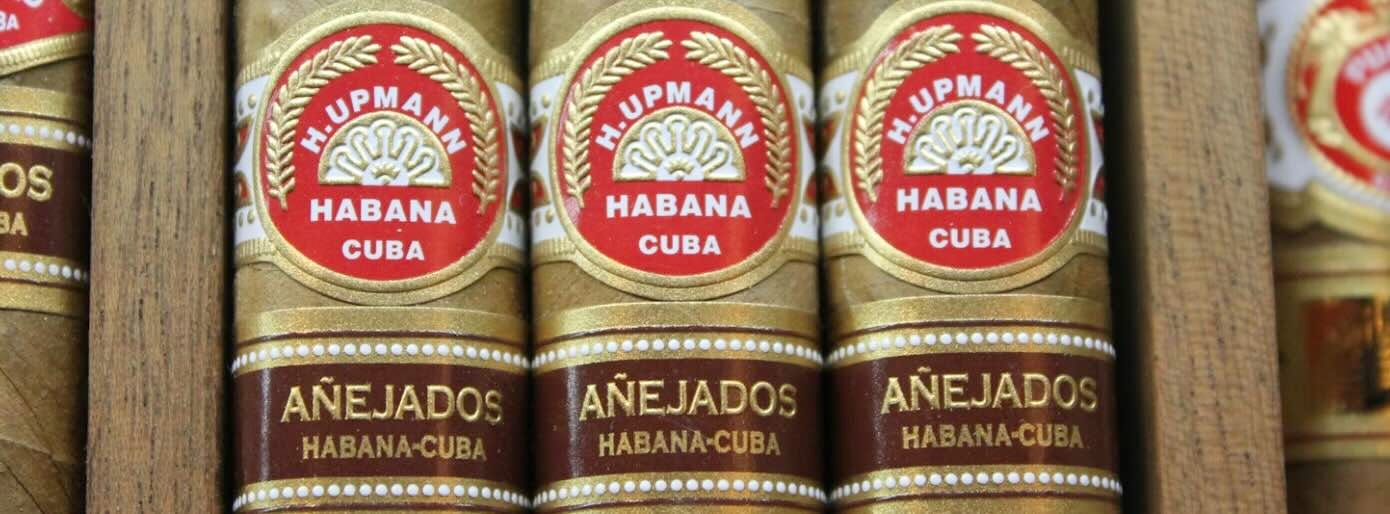
However, there are a wide variety of lawsuits, private equity deals, and foreign companies that are entangled with various Cuban cigar brands like Cohiba, Montecristo, and Romeo y Julieta.
I bring this topic up, because in the event of a Cuban economy opening up, there could be a variety of deals that get made, and settled, with global tobacco companies.
The Legacy Claimants (Windfall Exposure)
This is a massive topic that is extremely complicated, so I am going to keep this section somewhat high level and only touch on the major players.
In summary, there are currently about 6,000 U.S. citizens and corporations that hold federally certified claims against Cuba for billions of dollars in assets that were confiscated in the 1960s.
There are numerous lawsuits that have been going on for decades to resolve these issues, and they’ve seen more activity in 2026, as the Latin Times recently reported:
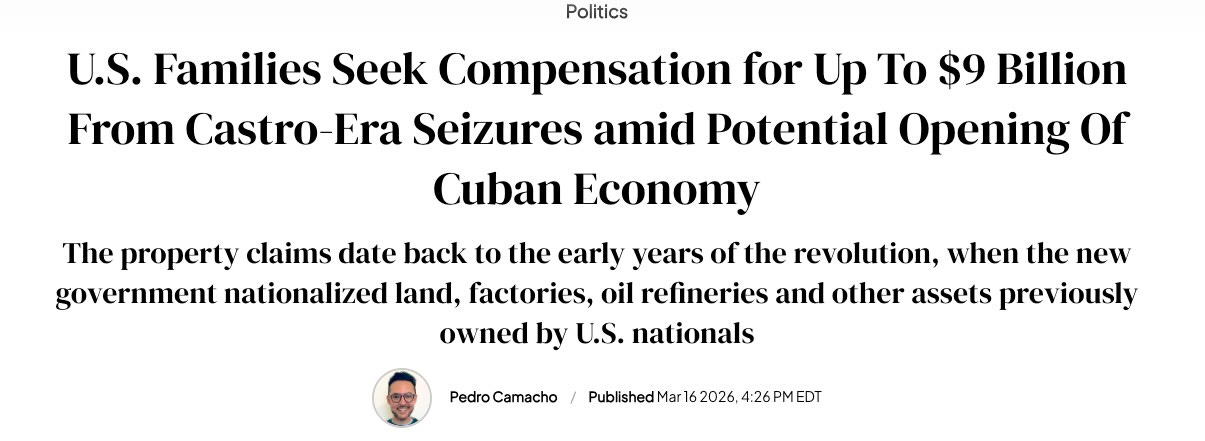
The companies listed below are just some of the more notable claimants, with the dollar amounts mostly related to their 1960’s value… Which means that today’s values, after interest and inflation could be worth FAR more.
Cuban Electric Company: Holds the largest single claim, valued at over $267 million (original 1960 value), but is estimated to be worth more than $1 billion today.
Exxon Mobil ( XOM 0.00%↑ ): $71.6 million claim and recently filed a lawsuit against Cuban state entities, seeking over $1 billion in damages for seized refineries and service stations.
Coca-Cola ( KO 0.00%↑ ): $27.5 million claim for nationalized bottling plants.
Colgate-Palmolive ( CL 0.00%↑ ): $14.5 million claim.
The list goes on, and on, and on!
I will likely do an in depth article about this entire topic in the future, as I believe there are major opportunities here.
As an example of what I mean, let me quickly explain what happened with the Cuban Electric Company, which is the only company listed above that is not publicly traded.
Through a long series of mergers and acquisitions, the Cuban Electric Company and its claims ended up being owned by Office Depot, which until December of 2025 was publicly traded on the NASDAQ as The ODP Corporation. Atlas Holdings took ODP private for about $1 billion, which means this private equity firm owns both the operating company that runs Office Depot and OfficeMax, as well as the ~$1 billion claims against Cuba!
Although it’s nearly impossible to imagine a scenario where any of these companies get any of their funds paid out to them (for a list of reasons, which mainly relates to the fact that Cuba has no money!), there is another outcome that could be just as good, if not better.
Hypothetically, instead of any of the claimants receiving a cash payout for their claim, they could receive certain licensing, reparations, or rights that would relate to the specific claim they have outstanding.
For example, ExxonMobile is currently seeking $1 billion, which is nearly certain to not be paid. Instead, ExxonMobile could receive the drilling rights for new oil wells in the rich oil and gas fields that are on and surround the island of Cuba. This exact scenario is currently unfolding in Venezuela, albeit with the help (and threat) of the US government.
The Infrastructure & Reconstruction Plays
It’s no secret that the entire island of Cuba is crumbling. This is both in the literal and figurative sense. As the society has struggled to survive, basic infrastructure - roads, buildings, electricity, plumbing, and everything in between - has been completely neglected. Even their admittedly awesome classic cars need upgrading!
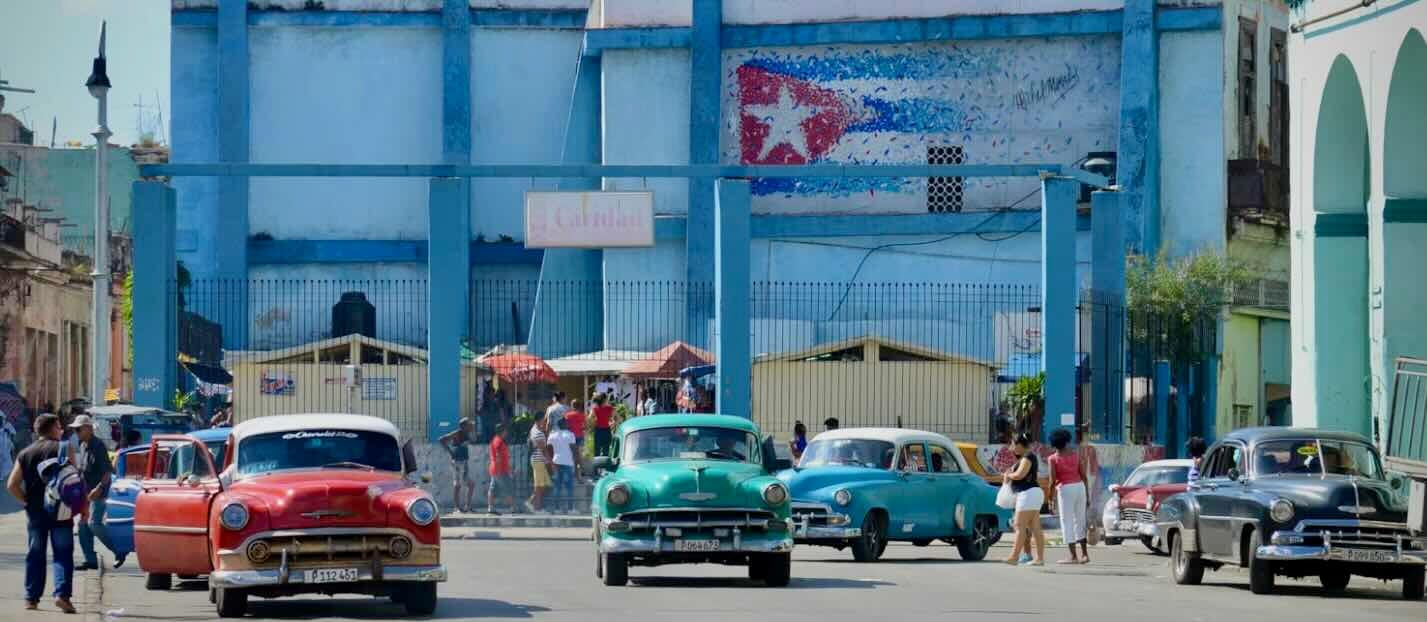
Because of the island’s close proximity to the United States, it would seem logistically obvious for US based companies to lead the charge in rebuilding Cuba. And if, or rather when, the US pushes Cuba towards a complete change of policy, it’s almost assured that part of this transition will include the participation of US firms.
For now, I’ll review just three of the possible companies that could get involved.
First is MasTec, Inc. ( MTZ 0.00%↑ ) which is a Florida-based construction giant led by Jorge Mas (who is also Chairman of the Cuban American National Foundation and a Trump supporter). It is perfectly positioned for large-scale utility and telecom rebuilding.
Despite the company’s recent parabolic performance, there is no other company that fits this opportunity better than MasTec. They can handle everything from solar, wind, and battery storage to power generation, manufacturing, and mining.
And it helps that MasTec’s leadership has direct ties to Cuba and the current US administration.
Next is Vulcan Materials ( VMC 0.00%↑ ), which operates a massive quarry in Mexico’s Yucatan Peninsula, making it the logistically obvious supplier of construction materials for Cuba’s reconstruction. The company is based in Alabama and also has extensive operations throughout the entire Southern US, including Cuba’s neighbor, Florida.
Considering that Vulcan specializes in asphalt and concrete manufacturing, there could potentially be many years and billions of dollars worth of opportunity within Cuba.
The last company I’ll mention is the obvious Mexican cement giant Cemex ( CX 0.00%↑ ). Not only does Cemex have the scale and ability to operate in Cuba, it’s political ties and Latin relations almost ensure that they will be involved in any rebuilding of Cuba.
The Regional Proxy Plays - A Cuba ETF?
Although this section is a bit redundant, I do want to mention one recent market development that relates to getting investment exposure to Cuba.
One of the most obvious and common questions an investor asks when thinking about investing in Cuba is, “Where and what is the ticker symbol for the Cuba ETF?”
Up until July of last year, you could have invested in the Herzfeld Caribbean Basin Fund (with the ticker “CUBA”), which had a basket of stocks positioned to gain from a normalized Cuba.
However, Herzfeld changed their strategy to pursue investing in collateralized loan obligations (CLO’s), and changed their ticker to HERZ 0.00%↑. You can read the full press release here.
I find the timing of this entire strategy change for Herzfeld to be extremely ironic, but I also sympathize with their situation. Over the past 20 years I have been in investments many times where I finally threw the towel in, only for the tides to change a year later and see my original investment thesis play out… Just after I gave up.
While I cannot speak for the Herzfeld team directly, I can only imagine the meetings that were going on prior to their strategy change and the frustrations that must have been boiling within that entire office for many, many years!
Regardless, there is no Cuba ETF to currently invest in, but there are dozens of regional proxy plays (many of which I’ve already mentioned).
The Pure-Play & Asset-Heavy Leaders (High Exposure)
There are three publicly traded companies that are positioned for significant upside when Cuba’s regime changes. Although one out of the three operates in a different industry, these three companies have the most exposure compared to everything I’ve mentioned so far - by a long shot.
Because each of these companies deserves their own deep dive, I’ll be sending out an entirely new report within the next week. Make sure you subscribe to receive it in your inbox.
Private Opportunities - MSMEs and Diaspora Investment
In the mid-1980’s Soviet leader Mikhail Gorbachev introduced a new political reform movement known as “Perestroika,” which is Russian for "restructuring.” The intent was to revitalize the stagnant Soviet economy by decentralizing economic controls and encouraging private business. This movement also eased state control over factories and farms.
Basically, this was the communists realizing their system didn’t work, so they implemented measures to move towards capitalism.
Cuba may be having it’s own Perestroika moment in 2026.
MIPYMES, which stands for Micro, Small, and Medium Enterprises, were introduced in Cuba during September of 2021 to operate as legal entities similar to LLC’s (but with a lot more rules).
The introduction of this new legal entity marked a shift toward recognizing private property. Under this legal structure, Cubans are allowed to start businesses that employ 3 to 100 workers and operate in most sectors (food, manufacturing, tech) with the intent of filling gaps of the poorly run state economy.
Then, last month, Cuba introduced reform measures that now allows Cuban nationals living abroad to directly own and operate private businesses. These people will also be able to open dollar-denominated bank accounts and use Cuban land for farming or development.
It’s estimated that nearly 5 million Cubans have left the island (and are still alive), which means that more than half of those originally born in Cuba now live somewhere else (there is speculation that Cuba’s stated population of 10 million is much lower - possibly closer to 8 million).
These 5 million expat Cubans, according to the March 2026 reforms, are now eligible to own companies operating in Cuba.
Considering that Cubans have fantastic entrepreneurial skills, there are a couple of companies that are worth looking at…
Supermarket23, which was founded by Aníbal Quevedo, is basically the Amazon of Cuba. If you visit their website, the layout is very similar to Amazon, but their products are exactly what you’d think a struggling society would need - basic foods and supplies like pasta, crackers, canned goods, power generators, and toiletries.
Quevedo, who is Cuban-born and was the former director of Cuba’s first state e-commerce site, likely has strong ties to the Cuban government including high-ranking military officials. Point being that you should understand that the success of Supermarket23 is not as simple as it might sound.
Still, the fact that Supermarket23 is up and running is at least some proof that there is progress with entrepreneurial projects within the Cuban economy.
The second company worth mentioning is Katapulk, which is similar to Supermarket23 except for the fact that Katapulk has secured licenses to export U.S. vehicles and heavy equipment to the island.
Founded by Cuban-American Hugo Cancio, there is also speculation that he is tied in with the Cuban government which has allowed him to grow Katapulk with less friction than other competitors.
For clarity, neither of these companies are Cuban companies, meaning that they are incorporated mostly in other countries despite operating heavily within the island. There have been no purely Cuban based privately owned companies that have made any significant impact, yet (if you know of one, please send me the information).
The ‘Change’ Coming to Cuba Soon?
I’ve called whatever is coming next for Cuba the ‘change’ because I really don’t know what the next transformation will be. Will it be a complete regime overthrow? An internal government reform process? Or will there be a shooting war that will evolve into some sort of foreign (US) occupation?
If I had to guess, I’d say it’s going to be some sort of combination of the above scenarios, minus the shooting war part.
As I said in the beginning of this guide, I do not want to dive into the history of how and why Cuba ended up where it is. There is plenty of information out there that explores all of that in depth.
What I do think is happening now is a changing in the world order, mostly led by the United States and Trump. Without taking any political sides, it’s clear that Trump wants to realign many relationships that the US has historically had - both bad and good. We’ve seen it with the tariff’s, we’re seeing it with NATO, we’ve seen it with Venezuela, and we’re currently holding our breath with the whole Iran situation.
The relationship that the US has had with Cuba is easily one of the most tumultuous and regretful of all - for both sides. It’s almost impossible to imagine a scenario where Cuba is brought into the ‘US fold’ under simple and friendly terms.
However, from the US and Trump perspective, this is a must happen. Cuba must be brought under US influence, as the threat that the island poses to the United States (mostly by proximity) is far too great to just ignore.
History has shown, mostly during the Cuban missile crisis, that the ability for US adversaries to set up shop in the US’s backyard is very real.
Today, in 2026, it’s not just speculation that this could happen again… It’s already happening. The Chinese have dramatically increased their cooperation with Cuba, especially on the military front. A variety of Chinese military installations have been set up throughout the island of Cuba, allowing for all types of surveillance, training, and logistical support - all of which potentially threaten the United States.
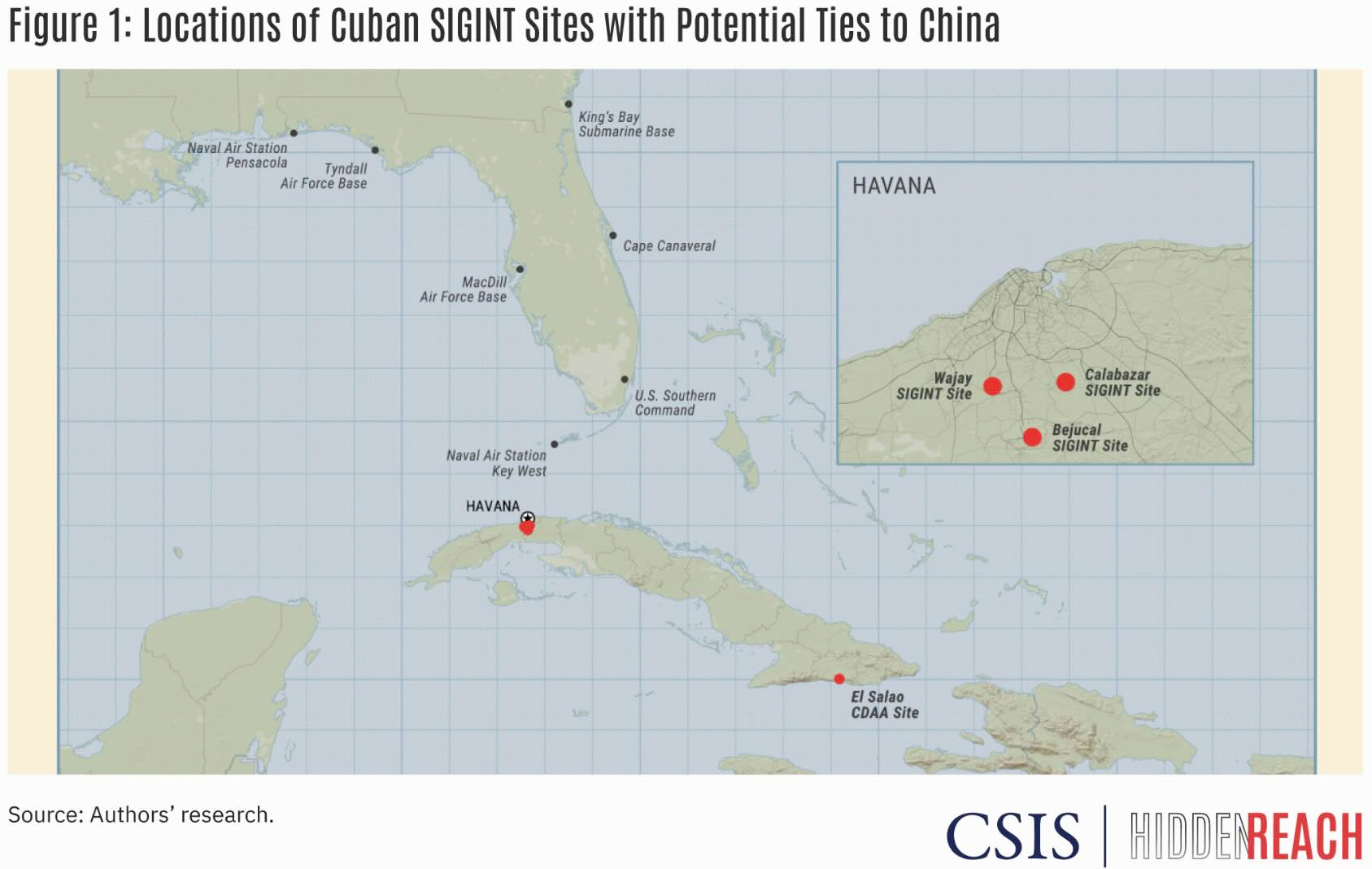
Source: CSIS
As I’ve mentioned many times over the past several years, nearly all wars transpiring in the world right now relate in some way to the impending US and China conflict. Proxy battles are underway on the literal battlefield, in space, in financial systems, on the web, through propaganda campaigns, and in nearly every place you can imagine.
While Cuba itself does not pose a direct threat to the US, it’s the parties that use Cuba and it’s global location as a conduit that do. The US will not stand for that, which is why a ‘change’ is certain to developing for Cuba soon.
Make sure you subscribe so you can get my follow up report on the three publicly traded companies that are best positioned for significant upside when Cuba’s regime changes.
If you’re a free subscriber, do me a favor:
Hit the ❤️. Just takes a second.
Hit the 🔁 restack. Helps me justify staring at a computer screen for the past 3 days!
Share with someone in your network who needs to see this.