


A couple of months ago my buddy called me with an interesting business opportunity. “Hey Cody,” he said, “we’ve got a massive solar farm that was just hit by a hail storm and we need it removed.”
He works for one of the biggest power companies in the world, and I have almost no experience in the power industry… So, I thought his call was kind of weird.
He continued, “Our insurance policy paid out on the replacement cost, but we still have to remove all of the damaged panels. I’m thinking we could just take them all off the site and store them somewhere to recycle at a later date, once we figure something out.”
“How many panels are there?” I asked.
“I’m not sure exactly,” he said, “but I think around 100,000. They’re not all damaged, but our company is going to upgrade the entire farm anyway, so they’re all being replaced.”
“100,000!?” I replied, “I don’t know what to do with a 100,000 of anything, let alone 100,000 broken solar panels! Doesn’t your company know how to do this already? This seems like a strange situation for you guys.”
“I know this sounds ridiculous, but we’ve already called a couple of different companies that specialize in this stuff and they have a backlog of almost a year until they can get the panels removed from our site, but we need to start installing the new ones well before that. We’re desperate here and basically willing to pay anyone to get these removed - that’s why I called you. I thought you’d be able to figure something out.”
As tempted as I am to get a crew of people together to go disassemble all of those panels, transport them to some field for storage, and then figure out how to recycle them, I know I’m much better off just investing in the companies that do this already.
But what companies do this!?
And how much money is actually involved here?
The Irony of “Green” Waste
As I went down the rabbit hole of finding solar panel recycling companies, I realized two things:
This industry is relatively early and disjointed.
This is already a multi-BILLION dollar industry.
Here is what is going on…
The first generation of green energy infrastructure is currently reaching its expiration date. While the transition to renewable energy was designed to benefit the environment, it’s now creating a massive hardware and pollution crisis.
Across the United States, Asia, and Europe:
Outdated and damaged solar panels are everywhere
“Blade graveyards” of retired wind turbines are growing
Millions of first-gen electric vehicle (EV) batteries are sitting in junk yards
Smart meters are hitting the scrap heap
And the list goes on…
Obviously this is a huge opportunity for creative individuals and companies.
Decommissioning and recycling green tech has become a mandatory industrial requirement, and that’s even more true as certain metals and chemicals increase in value.
Let’s dive into the different opportunities…
5 Categories of the Clean Energy Trash Crisis & 9 Companies Making the Profits
Wind Turbine Repurposing
Windmill turbine blades are a logistical nightmare because they are made of near-indestructible fiberglass and resin that cannot be melted down. To make things worse, they are extremely difficult to transport, with some blades measuring over 350 feet in length!
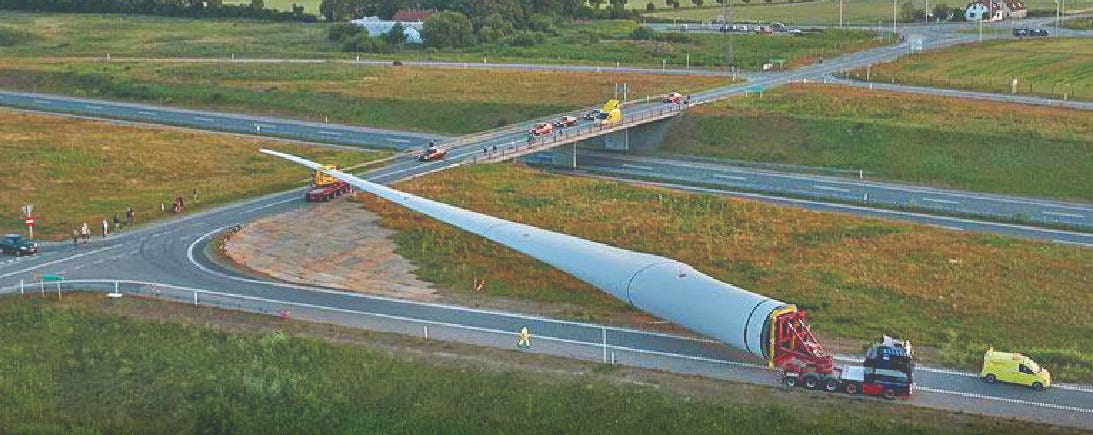
Source: WSM
That means it’s very difficult to find a way to profitably dispose, or reuse, these blades. What’s resulted in many parts of the world are massive ‘blade graveyards’ which are now causing even further issues related to neighborhood eyesores and real ecological concerns.
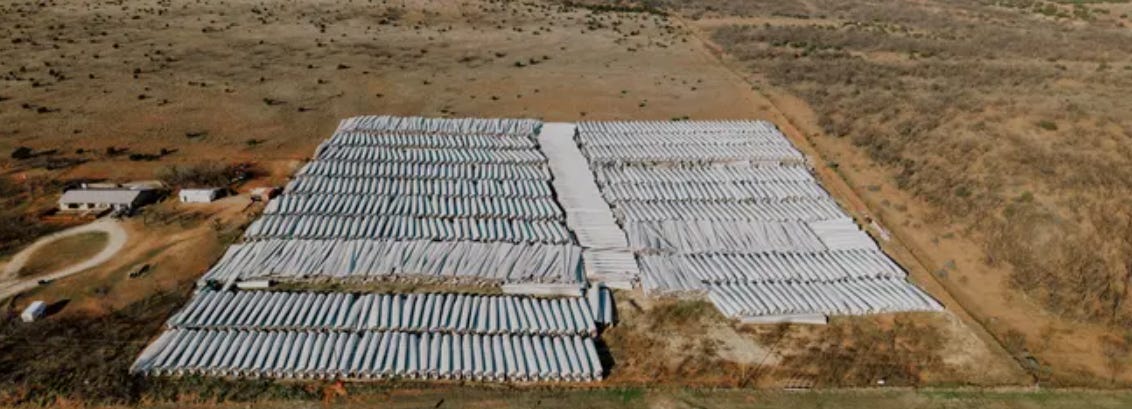
Source: DN
In Texas, it’s become a major issue with a variety of lawsuits surrounding the problem. One location, which estimates the cost to remove the blades “from $13 million to $54 million,” has a a group of people all pointing the finger at each other as to who’s responsible for getting rid of them.
There are a variety of companies that are able to cut the blades for different uses, which include park benches and bridges, but they’re hardly economical. Furthermore, the demand to dispose of the blades far outpaces the demand for unique repurposed equipment.
Some companies, like Renewablade, will bring equipment to these blade graveyards to perform recycling operations on site. They shred and grind up large blades and then use the resulting material as substrate in concrete. While the energy to perform this operation is debated (i.e. is it just easier to leave giant blades in a field in the middle of nowhere?), this company has found a unique niche.
One company that really sticks out is Vestas ( $VWDRY ), which is based in Denmark. Vestas is mostly known for manufacturing and installing large scale wind farms around the world, but they also recycle the same blades that they manufacture.
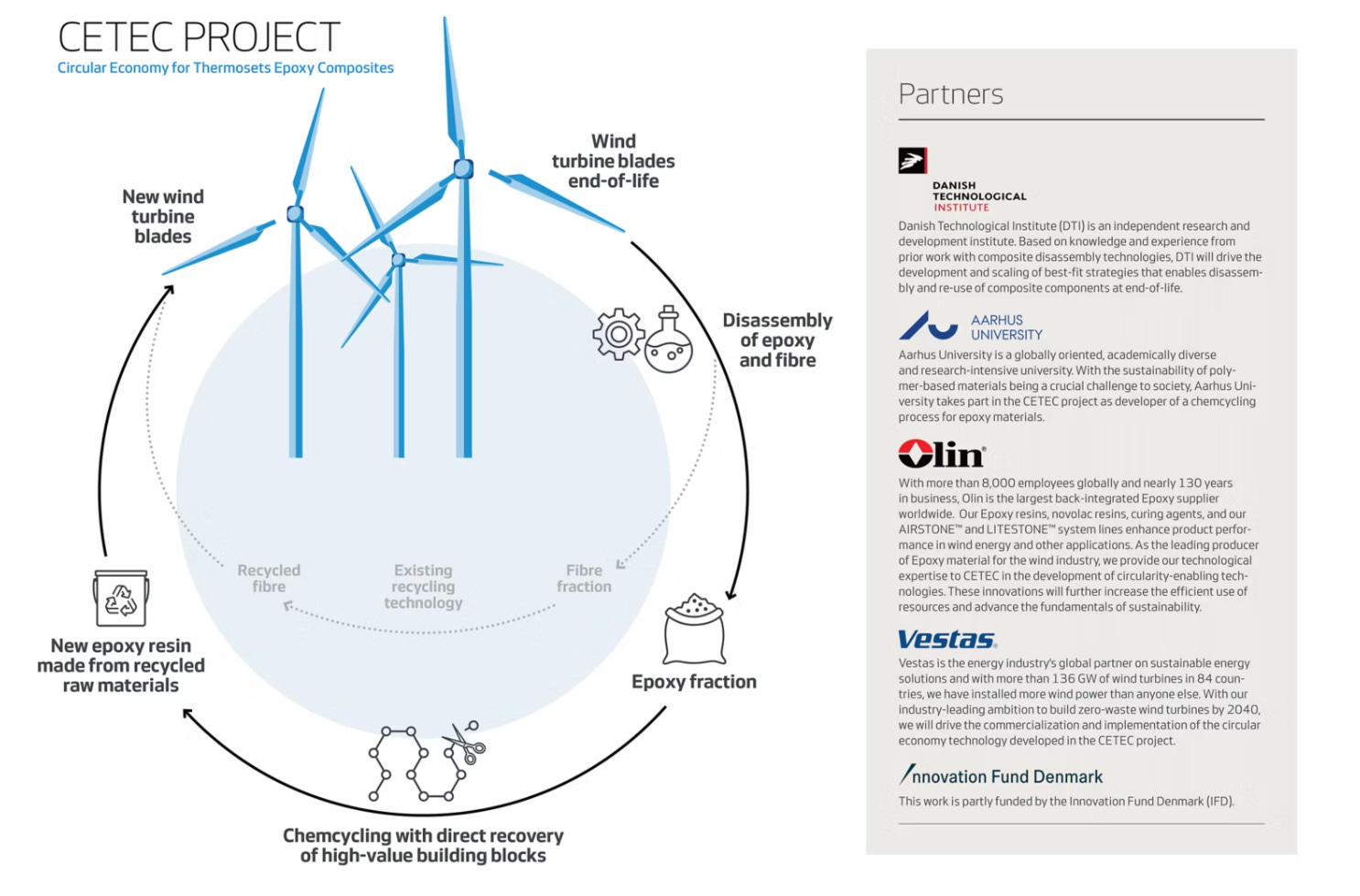
Source: Vestas
The company’s share price has more than doubled since last year, and could see even more gains if countries around the world shift more towards energy independence (which is likely going to be more of a priority considering out current geopolitical situation).
Rare Earth Recovery from EV Motor & Wind Generator Magnets
One company that highlights the issue with recycling rare earth metals is the US-based company, REEcycle, which just received a funding grant from the US Department of War.
Although the US is home to thousands of recyclers, none of them currently possess a profitable method for recovering rare earth elements (REEs) from magnets. Instead, these components are typically shredded and sold as low-value contaminated scrap metal.
This is obviously a massive issue when you consider that new applications for magnets emerge annually, driving a demand growth rate of over 30% while supply is expected to fall behind.
The situation is further complicated by the fact that there are currently no known substitutes that can match the performance of REEs. Even worse for the US, China’s 97% control over the REEs used in magnets leaves global manufacturers exposed to significant trade war volatility and supply chain risks.

