

3 Classic American Recreation Brands - All On Sale
And global turmoil might be a catalyst for all three...

Growing up in Southern California, I was lucky to be within a short drive to some of the best camping in the world.
To the north, the Sierra Nevada region offers Yosemite, Sequoia National Park, Lake Tahoe, and the highest mountain in the contiguous US - Mount Whitney (which I actually ran up by myself with a single water bottle one time).
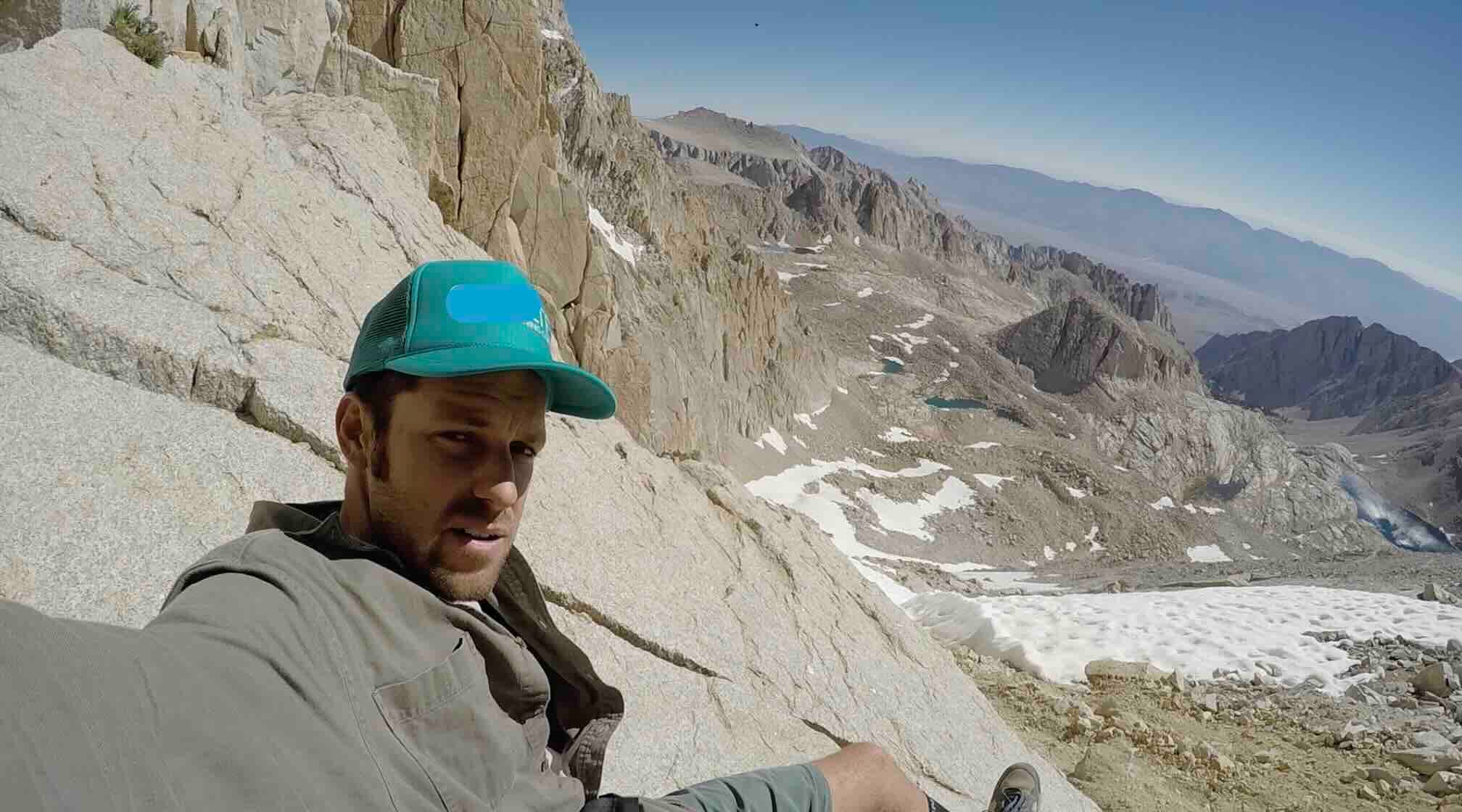
Almost to the top of Mt Whitney, feeling some vertigo from the altitude.
To the east, Nevada, Utah, and Arizona are all easily accessible and offer more outdoor activities than you can shake a stick at. My favorites in these three states include Sedona, Huntsville, and Lake Mead.
Whether it was hiking, off roading, boating, or just staring at the star-studded skies, this western part of the United States gives the ultimate feeling of freedom and adventure. It’s an addictive feeling that many people invest significant time and money to make part of their lifestyles.
Although I’ve spent plenty of time in the areas mentioned above, there is nowhere else I have spent as much time in as Baja, California. This part of Mexico is extremely remote, offering some of the truest adventure - mixed with some danger - for those really wanting to get out there. It also doesn’t hurt that this stretch of coastline has some of the best hidden surf in the world.
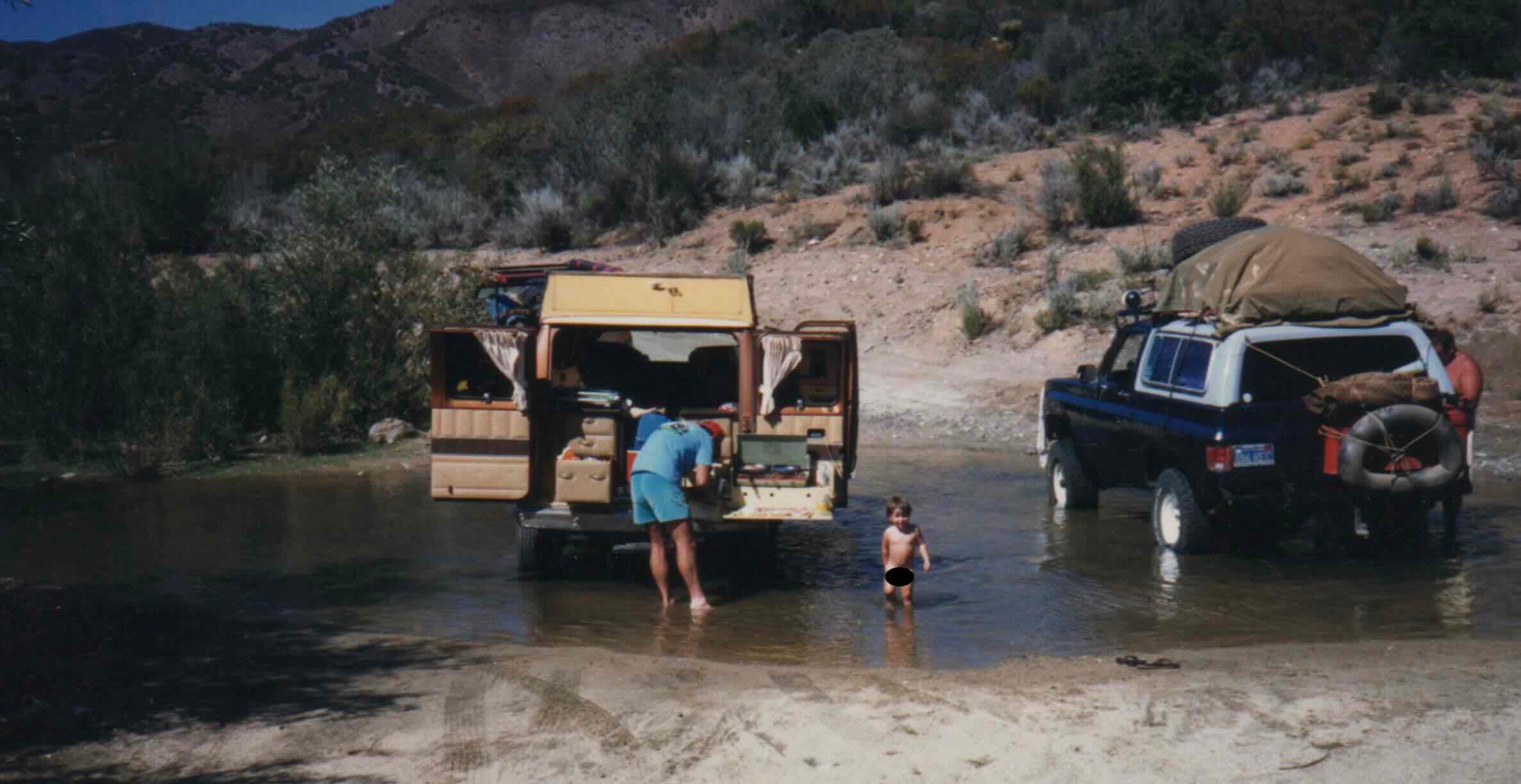
Yes, that’s me as a kid, somewhere in remote Baja during the late 80’s.
Over the years, I’ve owned boats, off road adventure vans, travel trailers, motorcycles, quads, and every accessory you can imagine. If you live in this part of the world, what I’m explaining doesn’t sound crazy at all.
If you’re somewhere else in the US, or some other country, maybe this lifestyle sounds strange.
Maybe you’d be surprised to hear that many people pay just as much for their monthly RV or boat loan as they do for the actual home they live in.
It’s a HUGE industry.
In 2024 alone, there were over 200,000 new RV loans, which totaled more than $11.5 billion dollars in total funded value. -RVIA
And that was just for RV’s. When you look at boats, motorcycles, and all the other outdoor toys, the number explodes to well over a trillion dollars!
“The outdoor recreation industry generated a record $1.3 trillion in economic output in 2024, supporting 5.2 million American jobs and accounting for 2.4% of the nation’s GDP.” -NMMA
You get the point. It’s a massive industry and Americans love to exercise their freedoms, find adventure, bond with their family, and spend money like drunken sailors.
Hell yeah. Merica!
However, the industry today looks a lot different than it did just a couple of years ago. Recreational companies during the pandemic years, especially in the US, saw a boom like they have never seen before.
Hundreds of billions of dollars plowed their way into motorhomes, travel trailers, boats, and every outdoor activity you can think of. Companies raked in record profits and literally ran out of things to sell.
Anyone reading this today probably remembers this time well. But 20 years from now, this story will be hard to comprehend. RV show rooms ran out of inventory to sell. There were no more boats left on dealer’s lots. For a period of time, things were out of stock indefinitely.
Just like any boom bust cycle, we all know what comes next…
Boom, BUST. Wen Next Boom?
It’s the classic supply and demand story that effects every industry you can think of. Once supply surpasses demand, there’s only one thing left to do… Wait until that supply runs down to create demand again.
During this waiting period, disaster can effect even some of the most well known brands. Companies that over extend themselves during boom times struggle to survive with their oversupply.
The exact scenario happened to Joann Fabrics and Crafts last year in 2025. After their boom in sales during the pandemic, they couldn’t adjust fast enough for the eventual drop off - when people stopped sitting at home all day knitting sweaters!
Looking further back in time, you can find dozens of similar situations. Chesapeake Energy during the shale boom, Lehman Brothers during the housing crisis, and Jay Cooke & Company during the railroad boom of the late 1800’s.
But just because major brand name companies go under during these times of turmoil doesn’t mean the industry they’re operating in disappears. In fact, companies that can survive hard times typically come out stronger on the other side.
Investors who can identify these companies that will make it through to brighter times can reap enormous rewards. The challenge in finding the right player who can outlast the rest.
When it comes to the outdoor industry, one of the best examples of ‘will this company survive?’ is Camping World ( CWH 0.00%↑ ) .
Just four years ago, this company was raking in nearly $7 billion a year and trading at over $40 per share. Today, their revenue is slightly less, but their shares have cratered to less than $6 per share.
Camping World is known as the nation's largest retailer of RV’s, RV accessories, and RV-related services. They were, until recently, led by well known CEO Marcus Lemonis who is still a major shareholder.
With a forward P/E of less than 6, Camping World would look extremely attractive right now… But they have a mountain of debt that looks very concerning to me.
What’s more interesting are the numerous brands that Camping World sells and does business with… But they don’t own. We’re talking about some of the best known recreational brands you can think of, with worldwide recognition.
These companies, which are household names, embody the feeling of adventure, freedom, and family. They’ve been featured in Hollywood movies for nearly a century and their products can maintain value over many decades.
Some antique versions can sell for much more than what they sell for today, all because outdoor enthusiasts value their real world functionality and their longterm symbology.
Today, you can buy these companies for a fraction of what they were previously valued at. And, if you’re like me, you shouldn’t be worried at all about the comeback of these brands.
I’ve picked four separate companies to highlight. Two of these companies own multiple brands that you will be very familiar with. You might of even seen one of them today.
A Catalyst for the Outdoor Recreation Industry?
Before we dive into the many brands and companies I think are on sale right now, it’s important to ask the question: why now?
Just as with any investment thesis, there needs to be some sort of catalyst to change the direction of a beat down industry. Why will the trend change?
We need to look no further than the current geopolitical chaos that is unfolding in the Middle East. While no one knows what will happen in the short term, there are already known effects impacting the medium term.
Drastic increases in oil prices have nearly doubled airfares in many parts of the world. Travel advisories for American citizens are no longer just applicable to the furthest flung destinations.
And that’s not even considering that flying just isn’t fun anymore. From the security line nightmares, to the unruly passenger packed buses in the sky, taking your family on a trip that involves airline travel is a nightmare.
We’ve seen this before. 25 years ago, to be exact. And here’s what happened next:
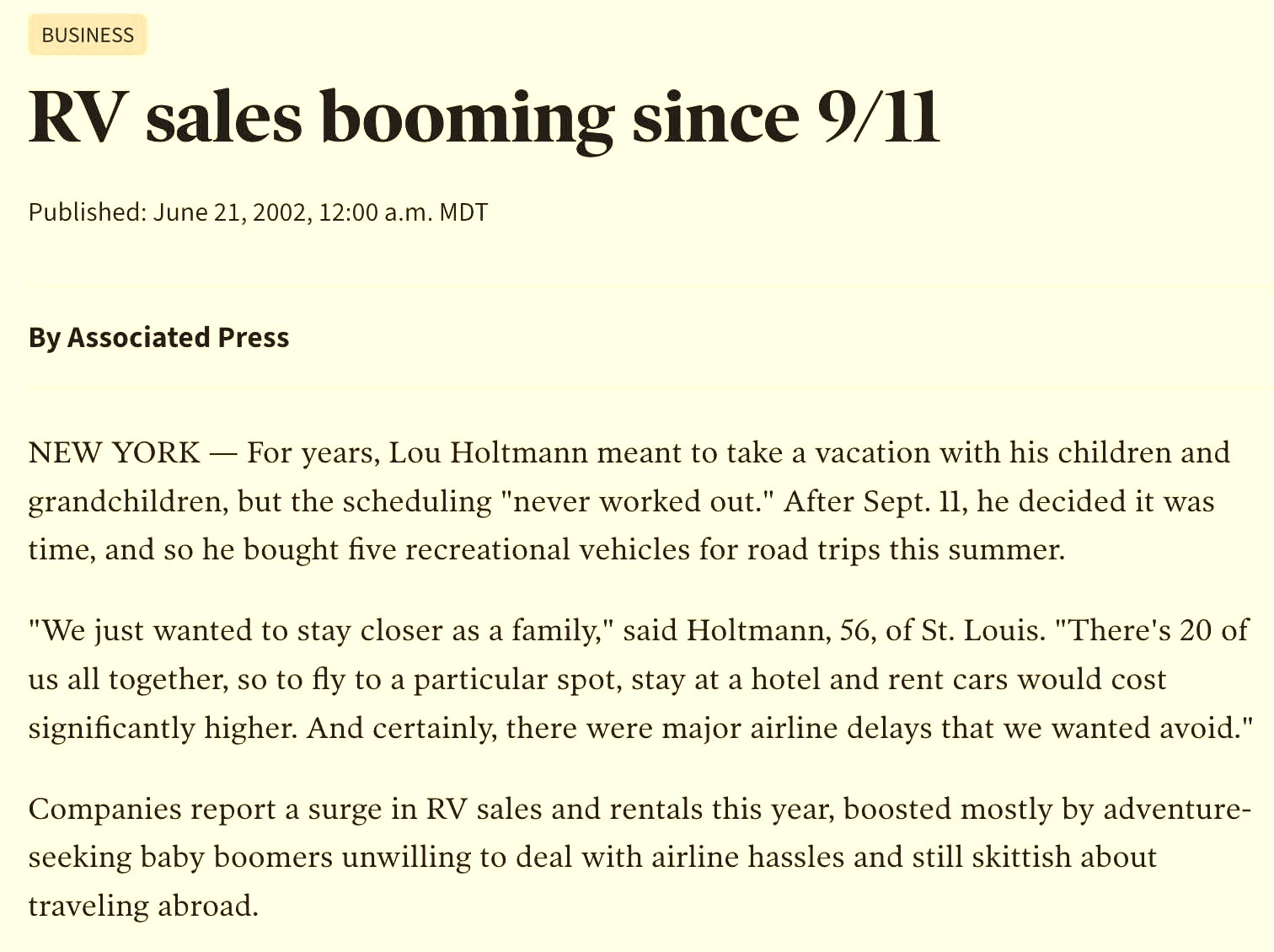
It doesn’t take a rocket surgeon to understand why this happened. The US has an incredible network of National Parks that include Yellowstone, Glacier, Grand Canyon, Everglades, Grand Teton, Zion, and dozens of other world famous natural wonders.
Then, when you combine the drivability of the entire US and the thousands of amazing cities, it’s obvious why consumers spend, and will continue to spend, so much money on adventures.
There are already signs of catalysts showing up, like this new partnership between Costco and Camping World.
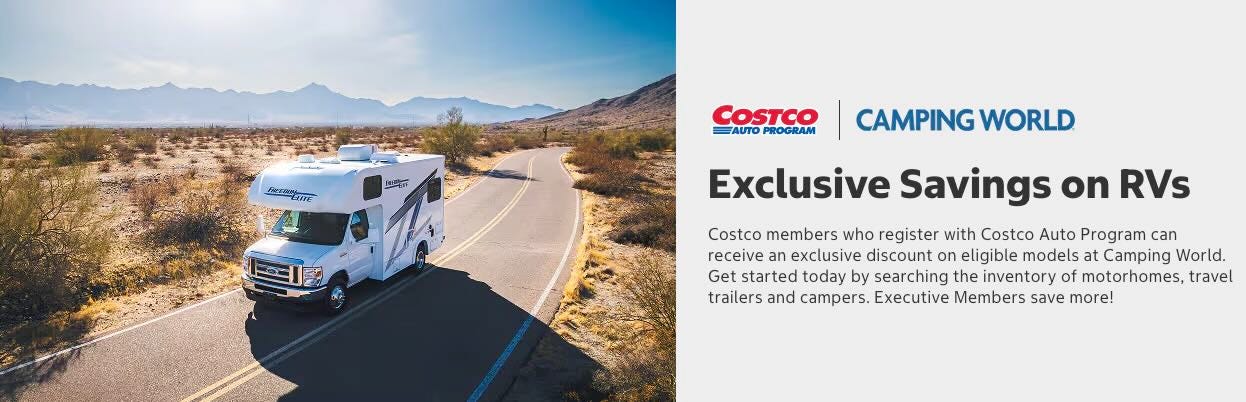
Source: Costco
Let’s dive into the companies best positioned to come out of the outdoor recreational bust cycle, catalyzed by renewed global uncertainty… And take a look at some more recent news that could be a sign that the industry is turning around.
